Trekking along New Zealand hiking trails, 2024
New Zealand is a fantastic country for enthusiasts of active tourism, wildlife lovers and seekers of endemic species of fauna and flora. Although its area is slightly smaller than the territory of Poland, it is much more diverse. You can find here alpine mountains, active and extinct volcanoes, glaciers, fjords, rocky ocean shores, wild beaches with golden sand, subtropical vegetation with rainforests and tree-high ferns as well as small exotic islands lost somewhere in the ocean. About 80% of New Zealand's plant species are endemic, i.e. they do not exist anywhere else. Several dozen endemic animal species also live here, including birds, bats, reptiles and insects.
There is a great number of hiking trails in New Zealand, ranging from one-day routes to long-distance routes. The most spectacular ones are included in the list called the Great Walks of New Zealand. All trails are very well adapted for visitors, they lead through the most interesting regions of the country showing their peculiarities and providing plenty of picturesque views.
Other areas of tourist activity are also very well developed including: kayaking, yachting, cruises, fishing, scenic flights by plane or helicopter, downhill skiing,... The entire tourist infrastructure, starting from information centers through accommodation and ending with travel agencies, is easily accessible and very efficient here.
To get to know New Zealand as thoroughly as possible, you need at least two months of intensive sightseeing, assuming that you can travel from place to place efficiently by your own car. It is worth keeping this in mind when you are planning a trip to this country.
However, among supporters of living in harmony with nature and careful observers of the surrounding natural environment in Poland, several things can cause consternation. Here they are:
1. Time difference between Poland and New Zealand is 10 hours, or 14 hours if you prefer. No matter how you look at it, when it is daytime in Poland, it is night in New Zealand and vice versa. It takes some time to adjust.
2. The sun in New Zealand rises in the east and sets in the west, just like in Poland. However, it moves across the northern sky, hence it is in the north at noon. For this reason, while walking along the tourist trail, I kept getting a signal to my subconscious that I was going in the opposite direction to the intended one.
3. I flew out of Poland at the beginning of April, when the birches sprouted young, light green leaves and the forests were full of anemones. In New ZealandIt was late autumn at that time - the birches had already lost almost all their leaves and day by day it was getting earlier and earlier.
4. Traffic in New Zealand is on the left. This means, among other things, that cars on the street most often appear from the least expected direction. This is especially dangerous if you cross the street outside the painted stripes. And what is worse, pedestrians on sidewalks, in shop doors and on tourist trails also try to walk on the left side, which is why I was hundreds of times in a collision course with a person coming from the opposite direction, often avoiding a collision in the last moment.
5. Most plant species are endemic here so they are naturally different from vegetation in Poland. It is noticeable that tall trees generally have tiny leaves. Animals are also different - they are generally not shy and more interested in human presence. There are completely different sounds of birds around, and the forests generally smell intensely of something associated with a mixture of spices for fatty meats or sauces. The life of the local rainforests both during the day and at night is a completely different story.
Flights and transfers
Flying to New Zealand and moving around this country is a separate event worth mentioning. In total, I took 10 flights (Gdańsk - London - Guangzhou - Auckland - Queenstown - Christchurch - Nelson - Wellington, Auckland - Guangzhou - London - Gdańsk) and 8 long-distance bus trips. In total, I spent two and a half days in the sky and the same amount of time rolling on wheels on asphalt and on mountain gravel roads.

On board the plane.

From London to Guangzhou in China, first part of a long-distance flight.


Over Wuhan, known for the outbreak of the Covid-19 pandemic. Fortunately, the flight took place at an altitude of 12 km above the city and the outside air temperature was -55 degrees of Celcius.

From Guangzhou, China to Auckland in New Zealand, second part of the long-distance flight.


On board of the plane I watched the movie The Hobbit, which was filmed in the fabulous scenery of New Zealand nature.

On the way back, during a transfer at the Guangzhou airport, I was detained for explanation. Finally, after two hours spent in uncertainty, it turned out that my tourist gas burner placed in my checked luggage looked suspicious. It was packed in a metal cup, which was placed in a metal pot, which in turn was placed in a metal bowl placed on a metal pot lid. Most likely, such a specifically prepared package aroused suspicion during the x-ray examination of the luggage.
Less fortunate was a Filipino detained with me. The spices for the dishes he carried in the suitcase did not pass the inspection.
Queenstown
In my opinion, it is the prettiest place within cities and towns in New Zealand. It is situated on a large mountain lake and is surrounded by the steep slopes of high peaks. It has an exceptionally rich offer for travellers, has extraordinary charm and an unforgettable tourist atmosphere, and is teeming with rich nightlife.


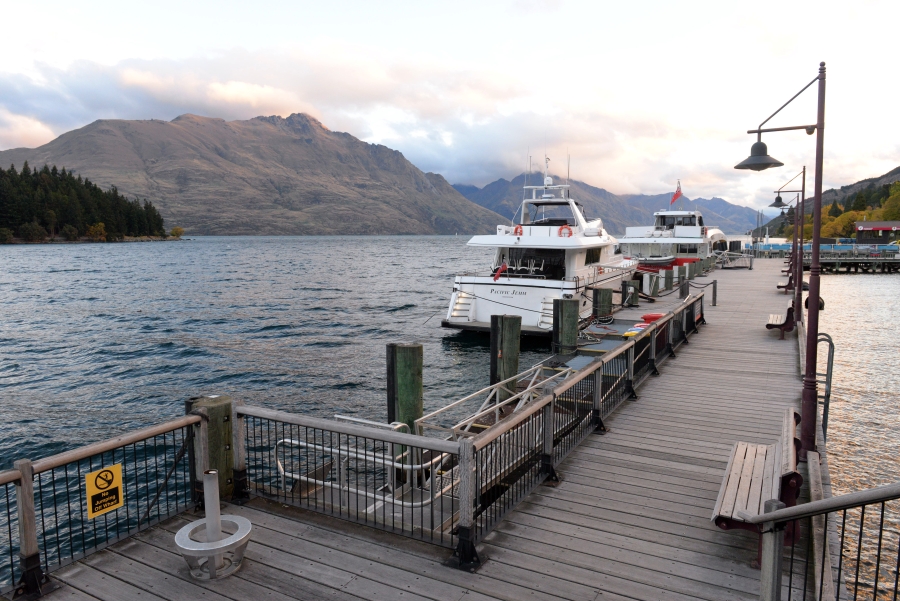

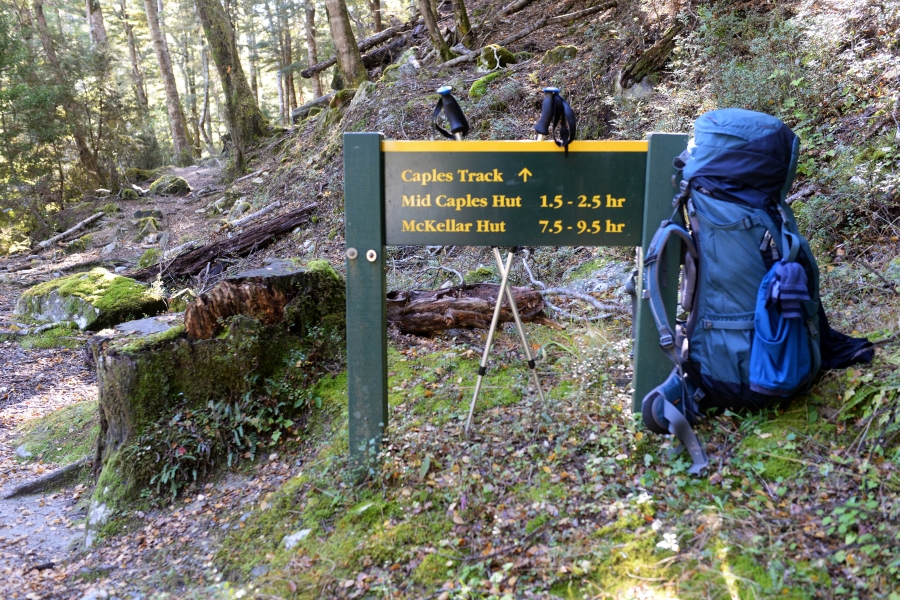
On the Greenstone Track and Caples Track
Both hiking trails lead through the valleys of rivers with the same names, creating a loop. Rainforests with beech trees and vast grassy plains dominate here. This is one of the few places in New Zealand where endemic Takahe birds live, which are extremely endangered with extinction, and there are currently less than 500 individuals in New Zealand (I managed to photograph one individual - photo at the end of this section).


Kakaruwai, the New Zealand robin.


After crossing wet meadows.

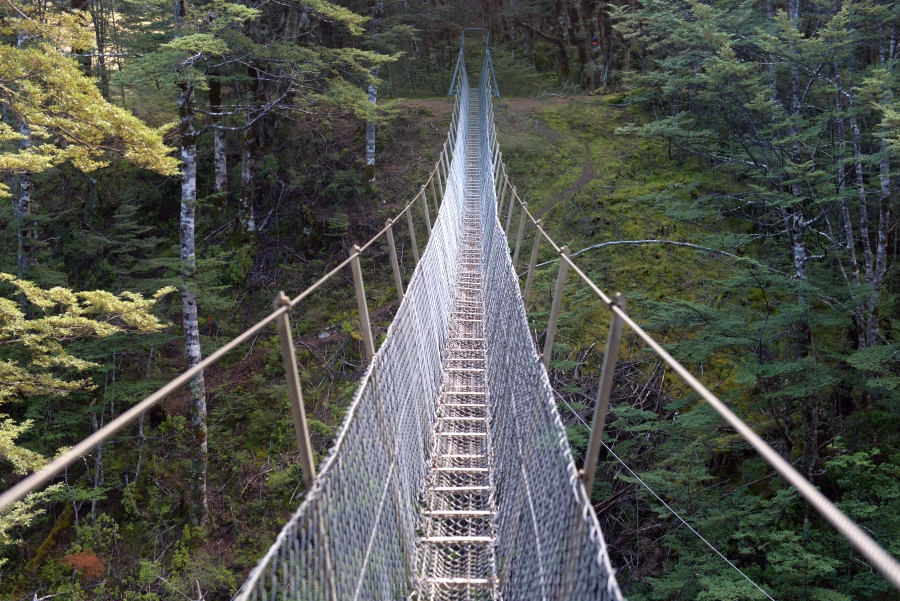
This footbridge is the best laxative I know. It works for everyone within 3 minutes at the latest ;-)
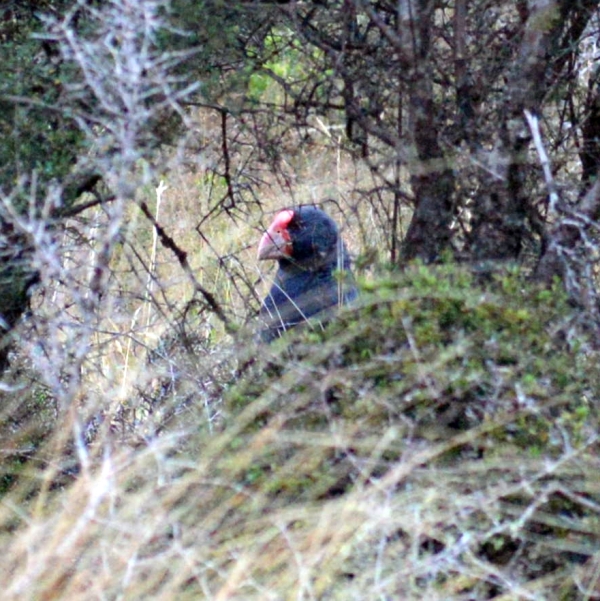
Takahe. An endemic species of flightless bird that is extremely threatened with extinction. It is estimated that there are fewer than 500 individuals of this species currently living in New Zealand.
On the Routeburn Track
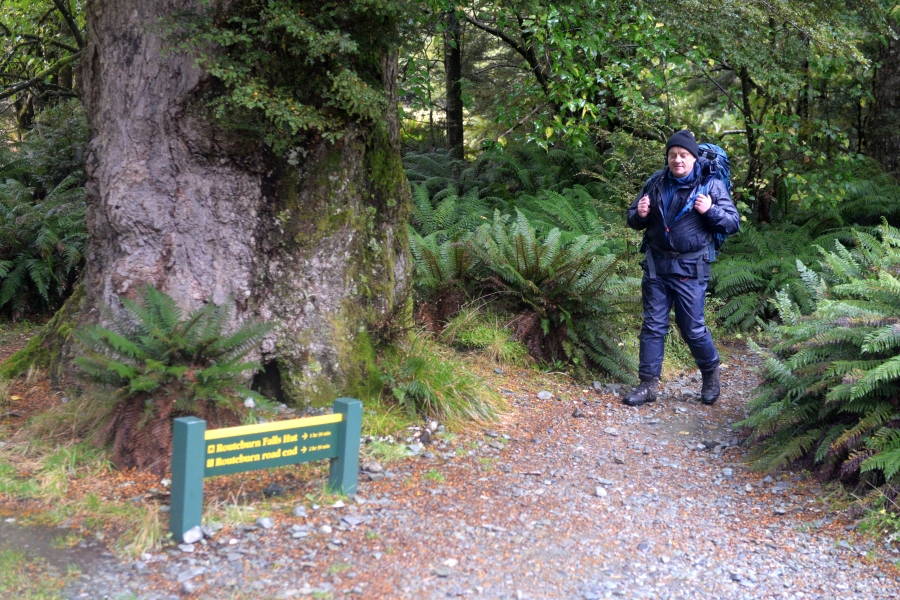
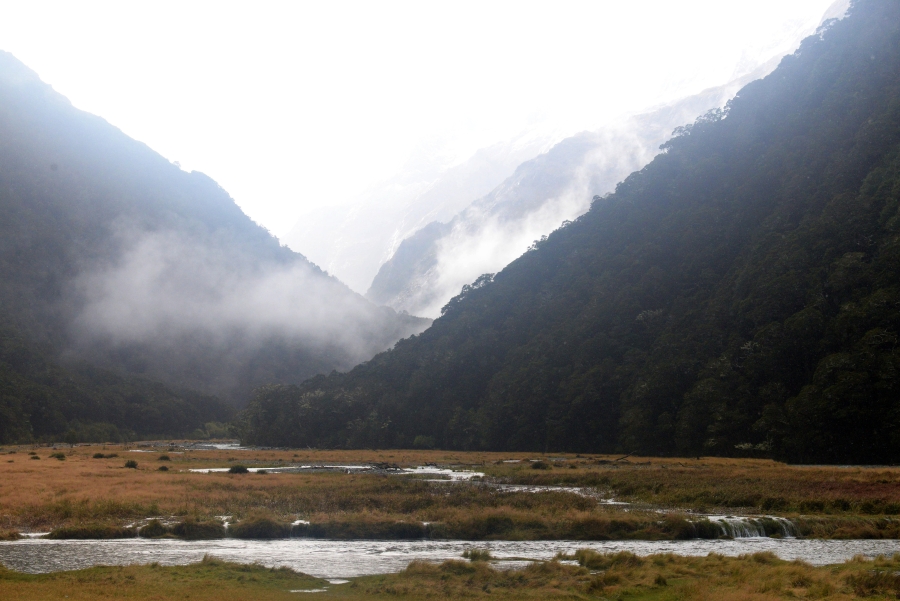
The main part of the trail leads along the ridges of the New Zealand Southern Alps. Long sections at the beginning and at the end lead through primary rainforests covering mountain valleys. The whole area is under the protection of Fiordland National Park, which is on the UNESCO World Heritage List. The trail is especially characterized by beautiful views of Alpine mountain peaks. However, I was more enchanted by the observations of rainforests with mossy trees and rocks, and especially their life at night. The trail is on the list of Great Walks of New Zealand.



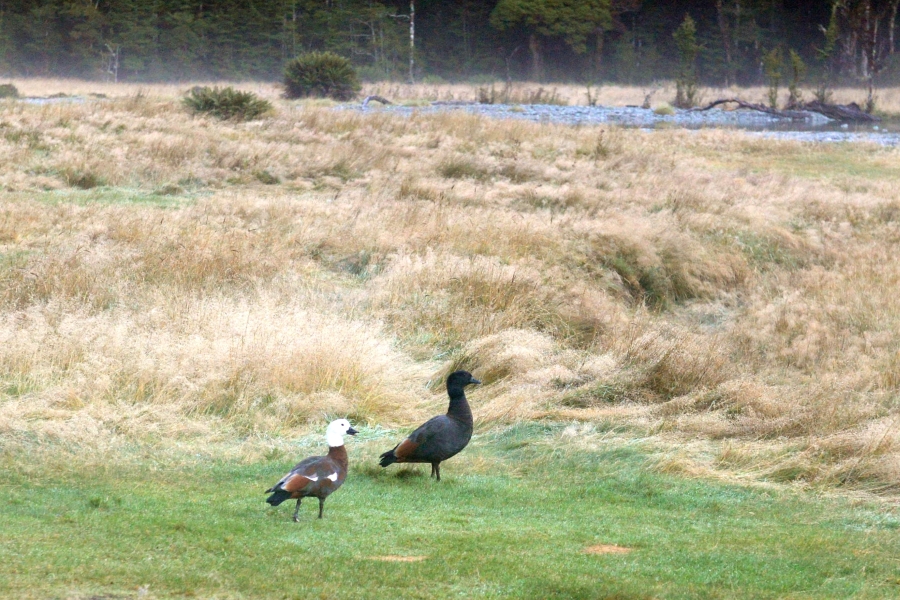
Whio - endemic blue duck living only in New Zealand. Threatened with extinction. It is estimated that only 2,500 individuals have survived to this day.


Kakaruwai, a New Zealand robin resting on my sleeping bag.

Ironman – an annual, extreme marathon organized on the Routeburn Track. These are 32 km of a murderous run. Just looking at the exhausted players was exhausting. It took me three whole days and one unforgettable night to complete this section, and they cover it in just a dozen or so hours.

Most competitors in this marathon were women.


On the Abel Tasman Coast Track
This is a trail leading entirely along the ocean coast, which is very diversified. Here you can find vertical walls of rocks falling straight into the ocean, wild, sandy beaches, charming bays with rocky islets and lush subtropical vegetation. The trail is included in the list of the most interesting trails in New Zealand - Great Walks of New Zealand.

This is how I got to the most distant point of the trail leading along the ocean shore. From there I walked back to the starting point.


The dusky bluebird is a flightless bird living in New Zealand, Papua New Guinea and Australia.


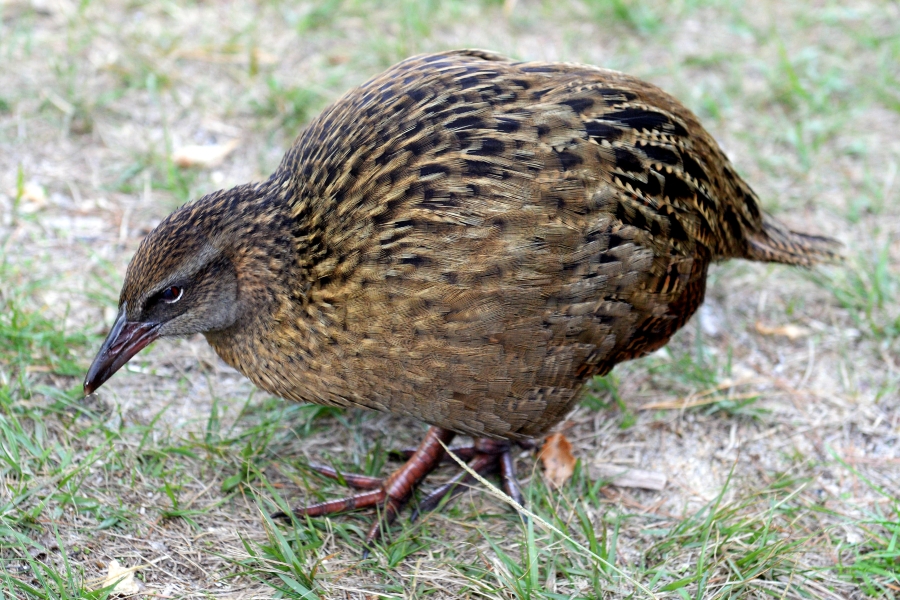
Weka - an endemic species of flightless bird living in New Zealand. It is threatened with extinction.



Crossing 2 adjacent estuaries during the low tide phase. This is possible only twice a day at a strictly defined time.


Californian quail imported to New Zealand.

Piwakawaka - New Zealand fantail.

Torea tai i.e. oystercatcher.

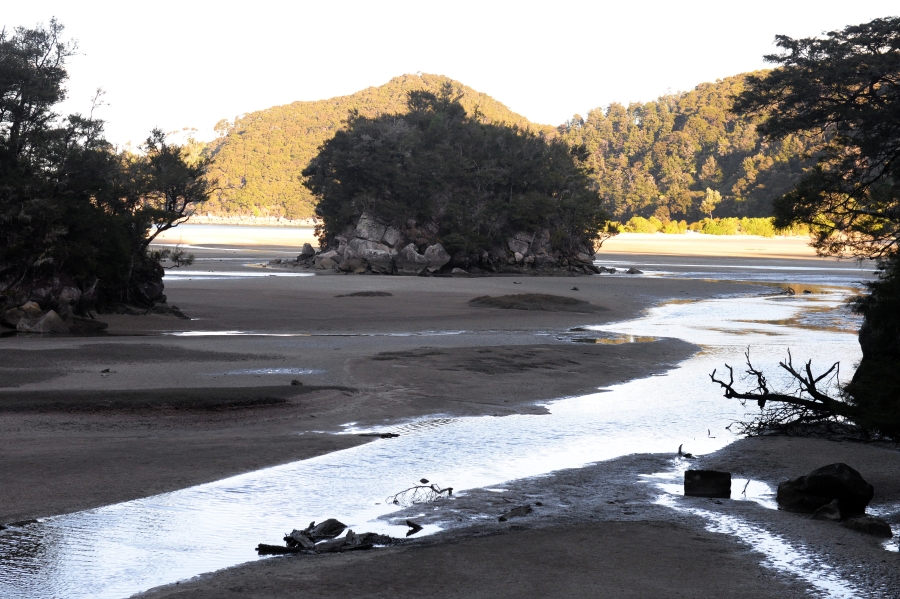
Crossing another river at low tide.


Weka, also known as a Maori hen, exploring my backpack in search of food.
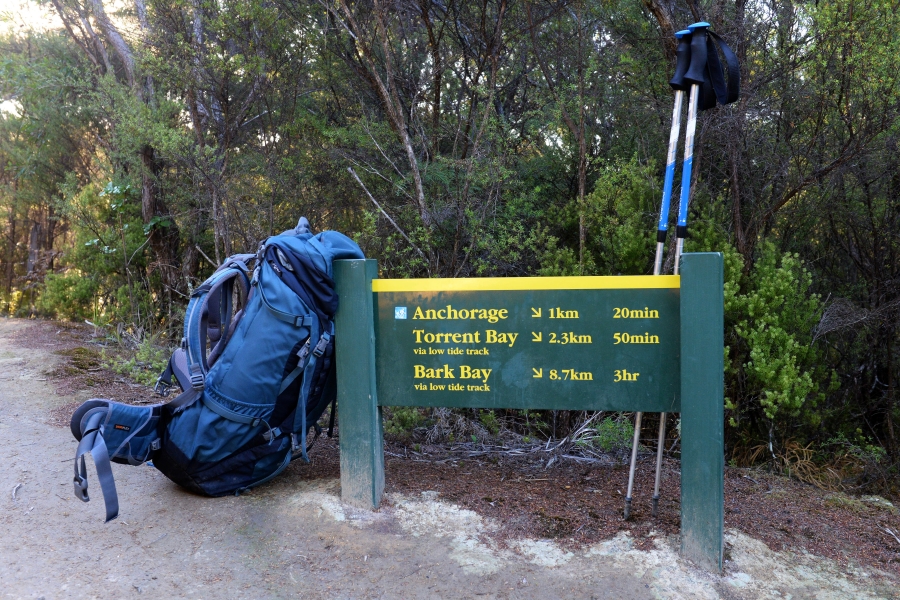
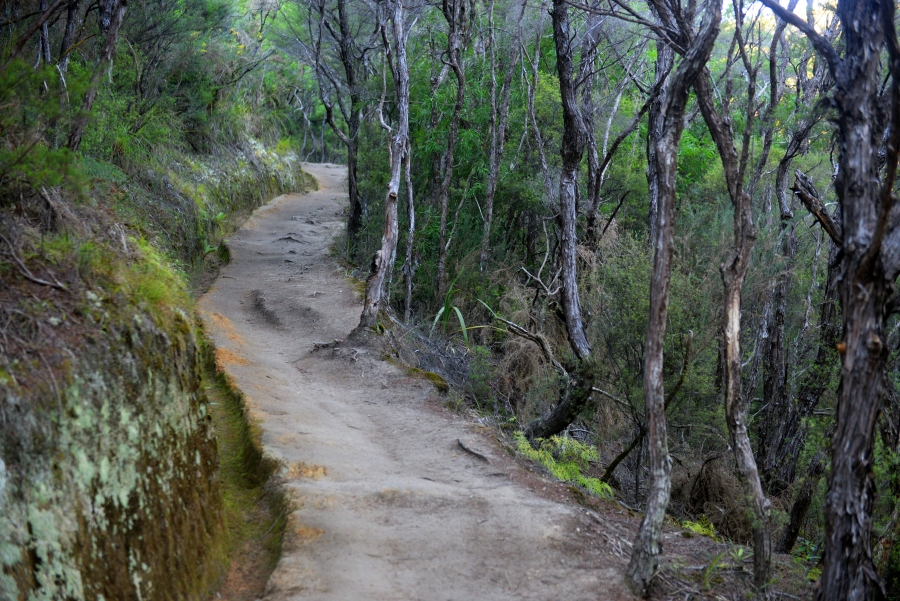

Anchorage Bay. Due to the shallow water depth, various types of smaller boats often anchor there.
On the Tongariro River Trail
A one-day trail running along the Tongariro River through beech forests with California redwoods, manuka bushes and impressive ferns. A favorite place for trout anglers. There are nice views of the mountains of Tongariro National Park.


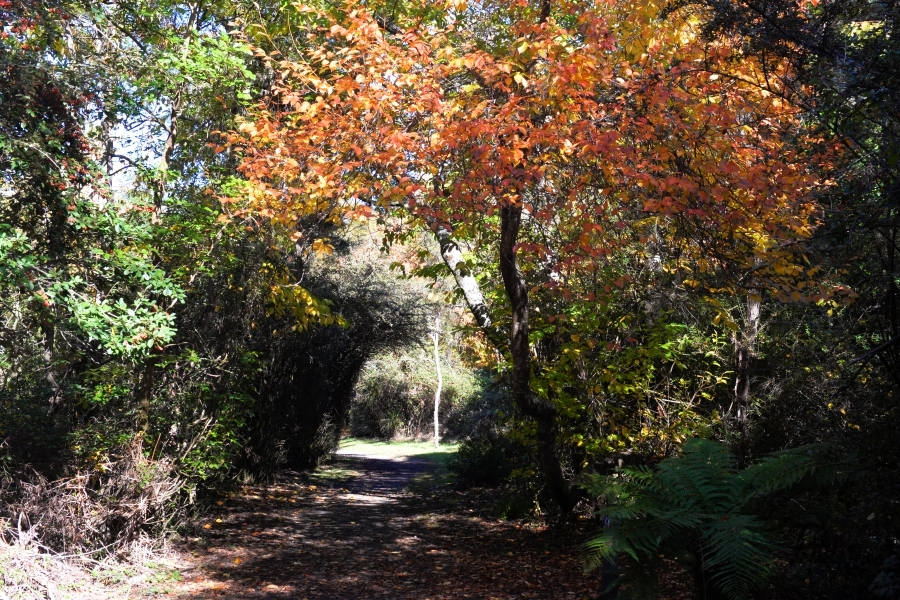


In this tree, cones grow straight from the trunk.

I wonder if it is as tasty as in Poland?


The first days of May. Spring is in bloom in Poland whereas autumn is already advanced in New Zealand.

Not all trees have the habit of losing their leaves for winter, hence the contrasting pictures.
On the Tongariro Alpine Crossing
The tourist trail leads through the Tongariro National Park, which is on the UNESCO World Heritage List. It is considered New Zealand's prettiest one-day trail and one of the ten prettiest in the world. The route includes three cones of active volcanoes, vast fields of hardened lava, emerald or blue volcanic lakes and fumaroles, i.e. holes from which hydrogen chloride, sulfur dioxide and water vapor escape. The trail is included in the Great Walks of New Zealand.

Ngauruhoe - the largest of the three active volcanoes. It has erupted as many as 60 times over the last 150 years.


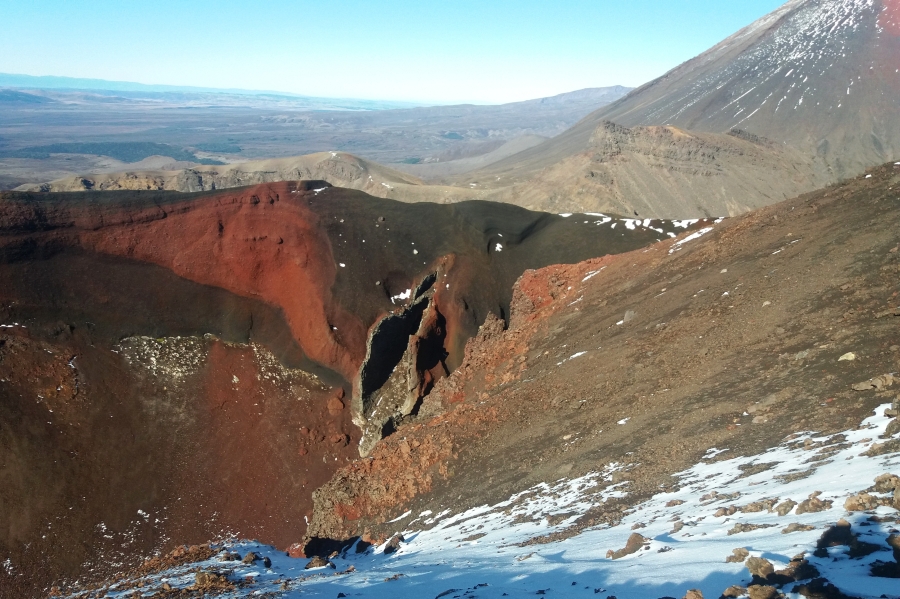


The temperature of these fumes is about 900 degrees of Celsius.


It happened a day before the last day in New Zealand. Fortunately, Mc Gyver tape works wonders :-)
Miscellaneous

This idea from Queenstown is worth recommending. It makes transporting bicycles much easier and improves the safety of passengers on the bus.

Two-story bicycle parking in Nelson.

The sun in New Zealand moves across the northern sky, hence it is in the north at noon.
The photo above shows a very simple astronomical lab, where the smartphone clock shows 12:00 at noon. The stick casts a shadow from the Sun, which is then in the north, in the opposite direction i.e. south. This is confirmed by the arrows on the compass.
(The direction of the shadow and the south direction of the arrow on the compass do not coincide in 100%. This is due to the fact that the compass points to the magnetic pole and the shadow of the stick - to the astronomical pole. In addition, New Zealand has one common time zone for the entire area, which is another reason for discrepancies (for example, in Poland, where there is also one zone, there is a 40-minute difference between the time on the eastern and western borders of the country)).

New Zealand is the kingdom of ferns. There are many species and some of them are as tall as trees. Above there is a set of several different twigs picked off in one place on the Abel Tasman Coast Track.

New Zealand Toi toi wine. Due to the name, it is recommended only for desperate people ;-)
(This name in Poland describes any kind of a portable toilet.)

A Polish product on a New Zealand table is a real rarity.