Exploration of the Bukit Barisan Selatan National Park in Sumatra (Indonesia), 2025
If you are looking for nightlife in seaside resorts or party centres of big cities, a comfortable but boring time doing nothing, or exploring spectacular monuments from the pre-plastic era, then Sumatra is definitely not for you.
If you are looking for true exoticism, unspoiled tropical nature, absolutely unrivaled Asian cuisine, the world's best Sumatran coffee or exotic fruit you have never even heard of, then this is definitely the place for you.
You will see many exotic plants and animals (including endemic ones) in their natural habitats, such as the world's largest and the world's tallest flowers (i.e. the Rafflesia arnoldii and the titan arum), gibbons at sunrise in the rainforest and aggressive macaques begging along asphalt roads. You will also easily find ocean paradise beaches with no one else in sight but you and you will be able to immerse yourself in the sea of metropolitan slums, discovering their back alleys street by street. With a bit of luck you will not meet a white person even for weeks and you likely will not have a single opportunity to brush up on your English. And in the end, you will make the groundbreaking discovery that the time lapse is relative - the time has deliberately stopped somewhere just to speed up like a hypersonic rocket somewhere else.

Indonesia. Sumatra is highlighted in red and the remaining 18,000 islands are marked in green.

The striking similarity between the coats of arms and flags of Indonesia (on the left) and Poland.

Map of Sumatra (source: Internet).
RELIGIONS
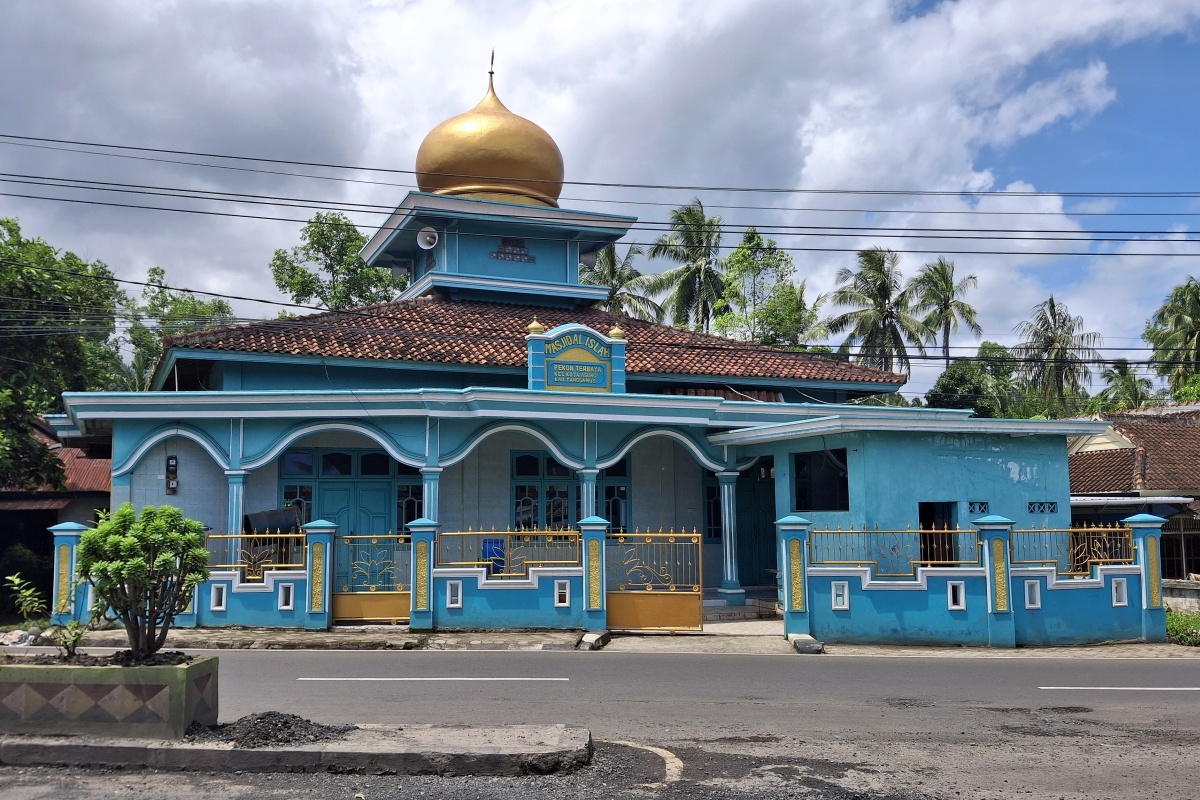
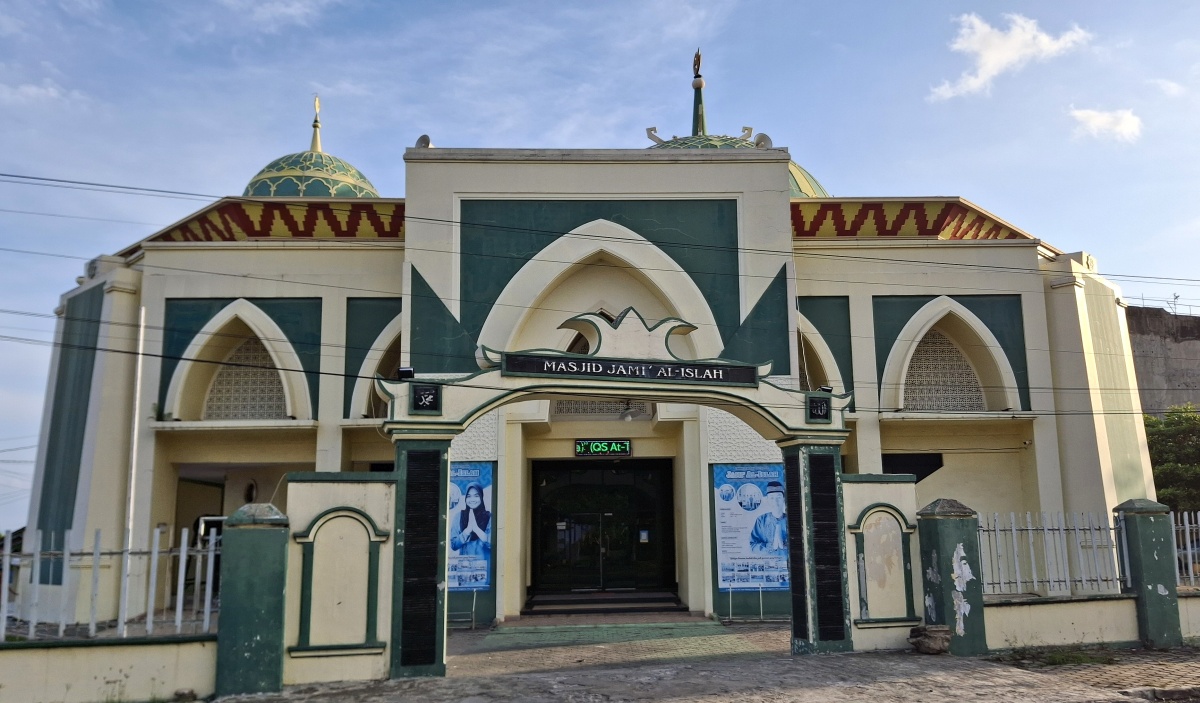
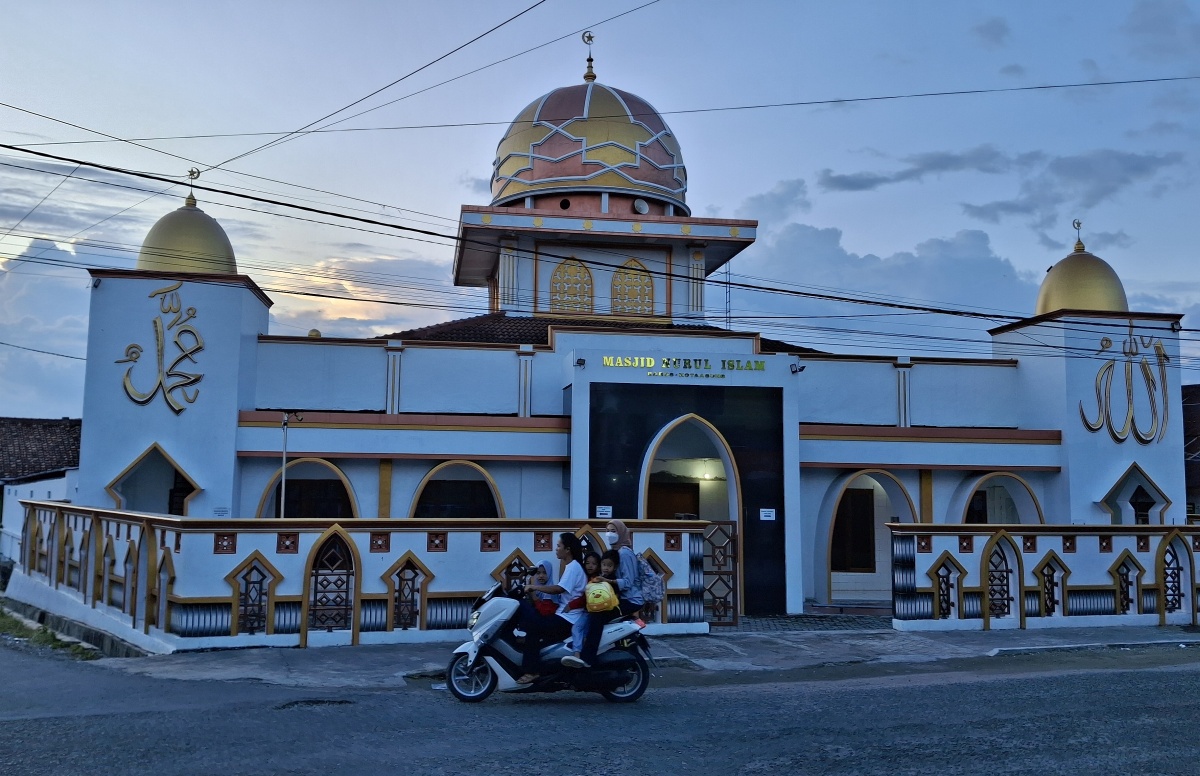
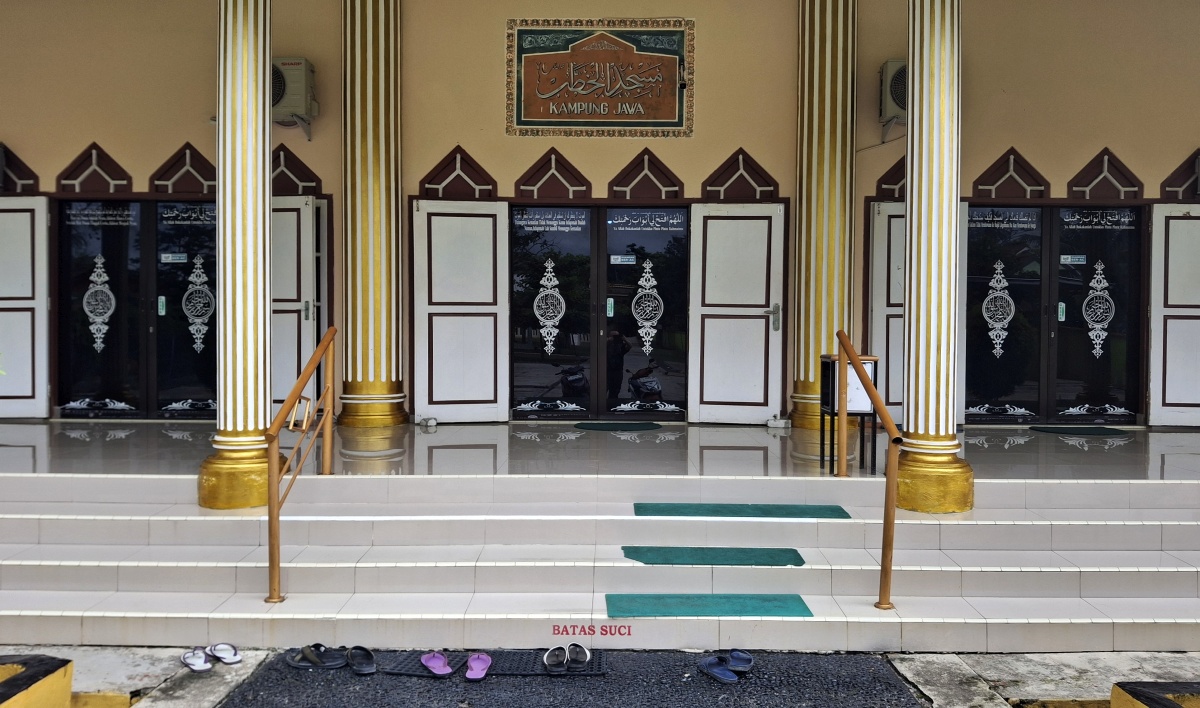
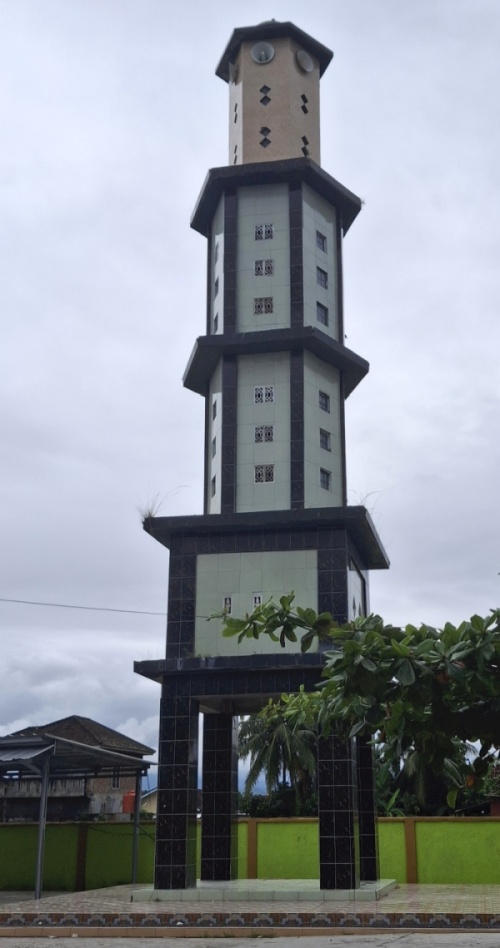
The dominant religion in Sumatra is Islam, with a staggering 87% of adherents. Depending on the region, there are different varieties ranging from traditional through modernist to those applying Sharia law. Imposing mosques towering above the rooftops of the surrounding buildings, regular sounds of prayers from loudspeakers mounted on minarets echoing through the surrounding streets, and worshippers dressed in traditional Muslim attire are a permanent feature of the island.
Other religions include Christianity, Buddhism, Hinduism and animism. However, they are not as visible in the local landscape.
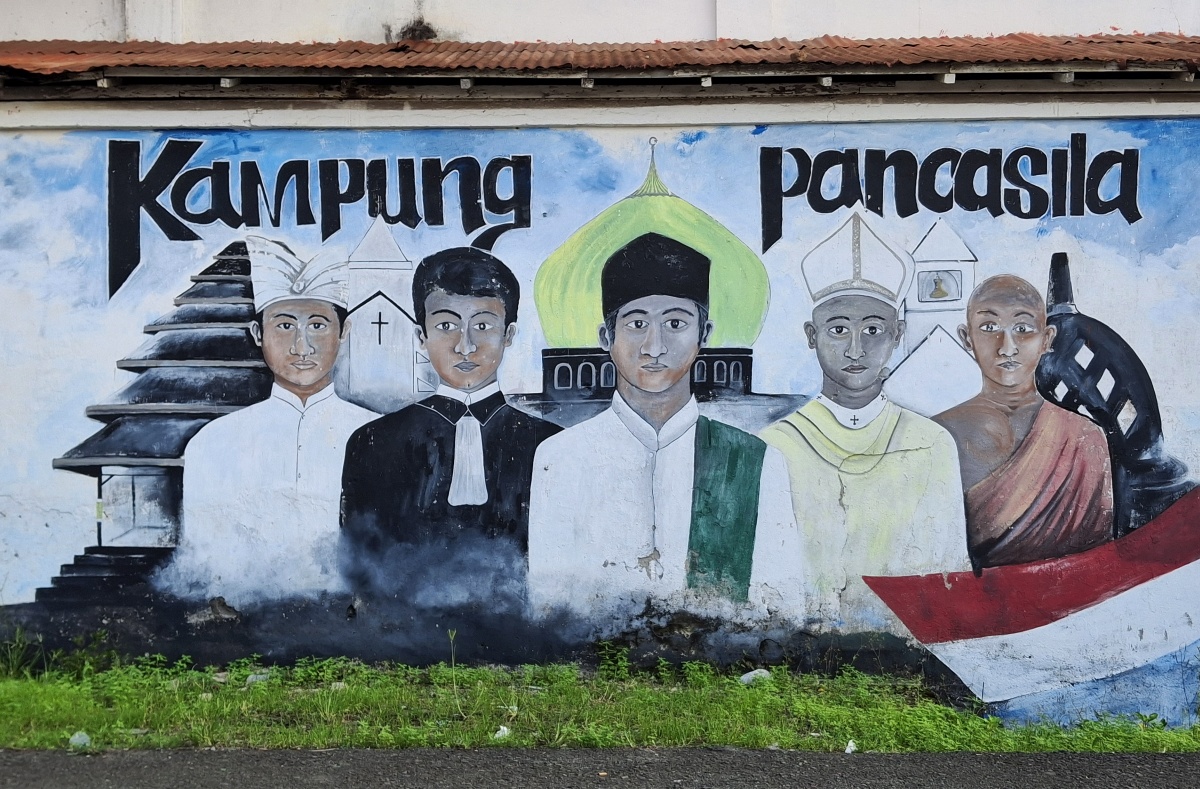
Intersting mural depicting the dominant religions in Indonesia: Hinduism, Protestantism, Islam, Christianity and Buddhism.
ISLAM
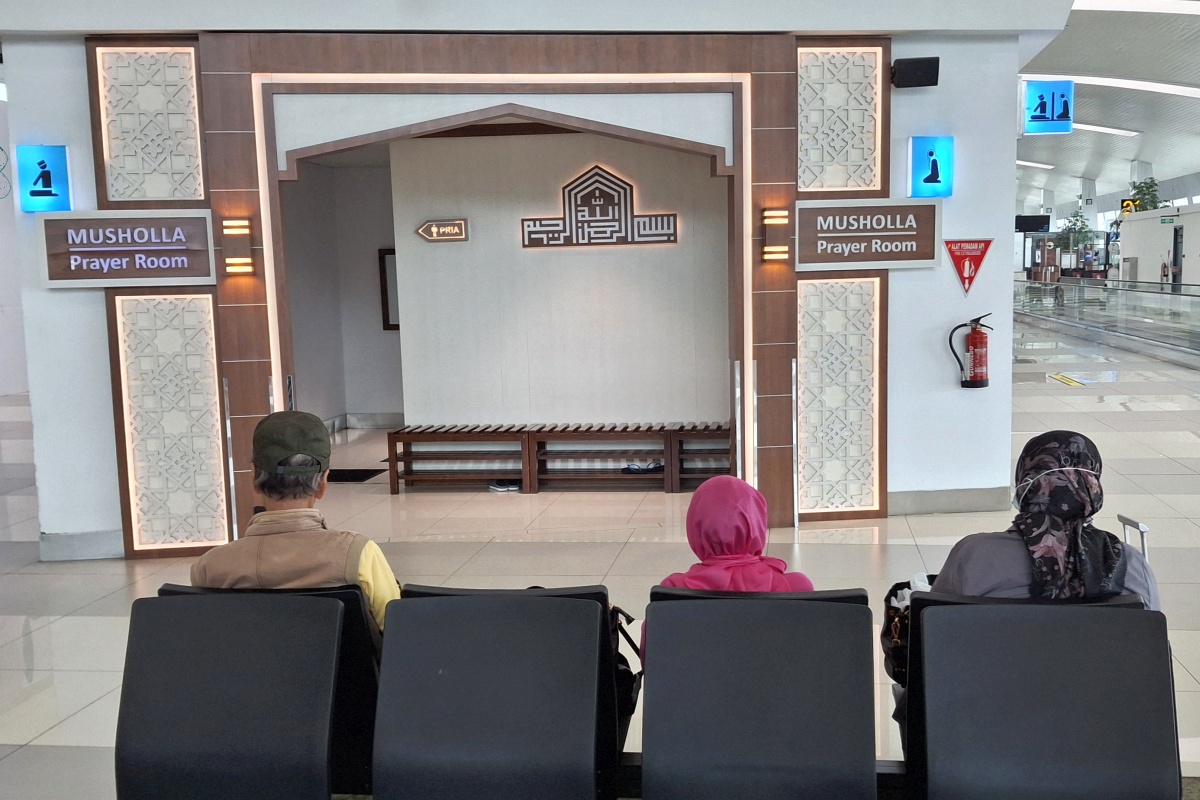
Muslim prayer room at the Jakarta airport.




HINDUISM
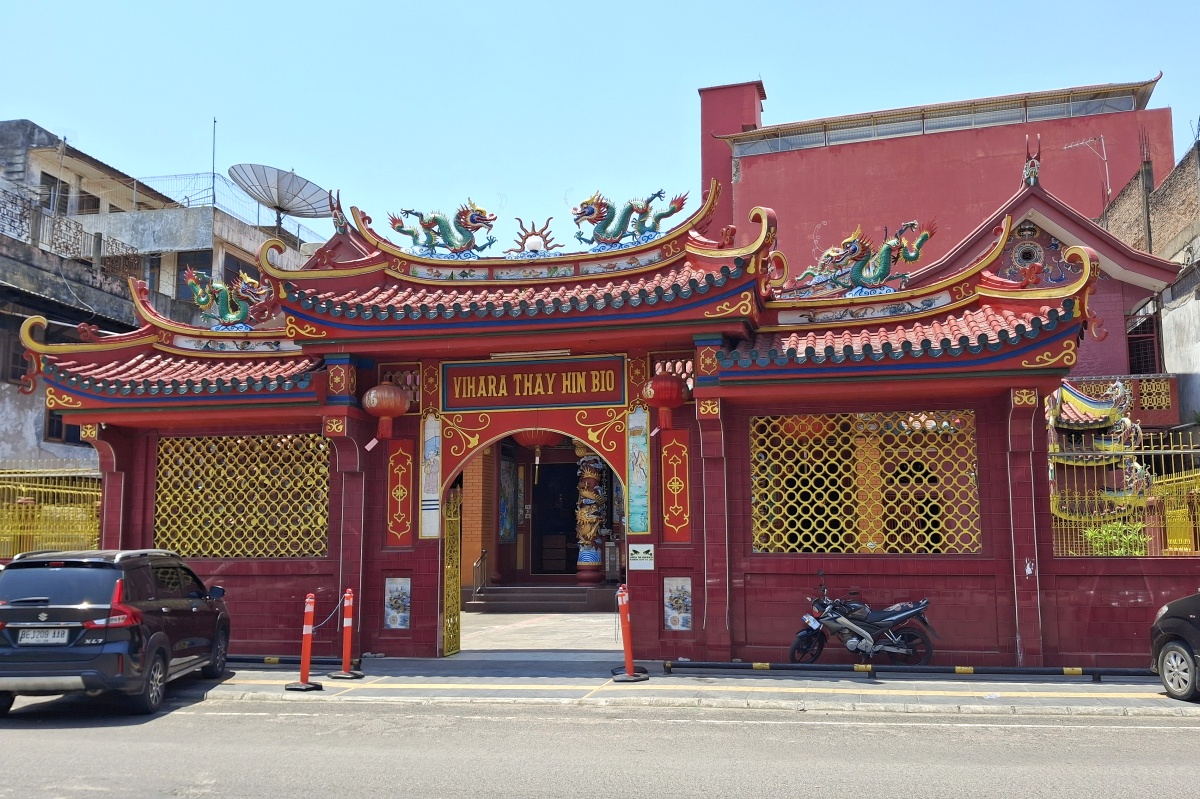
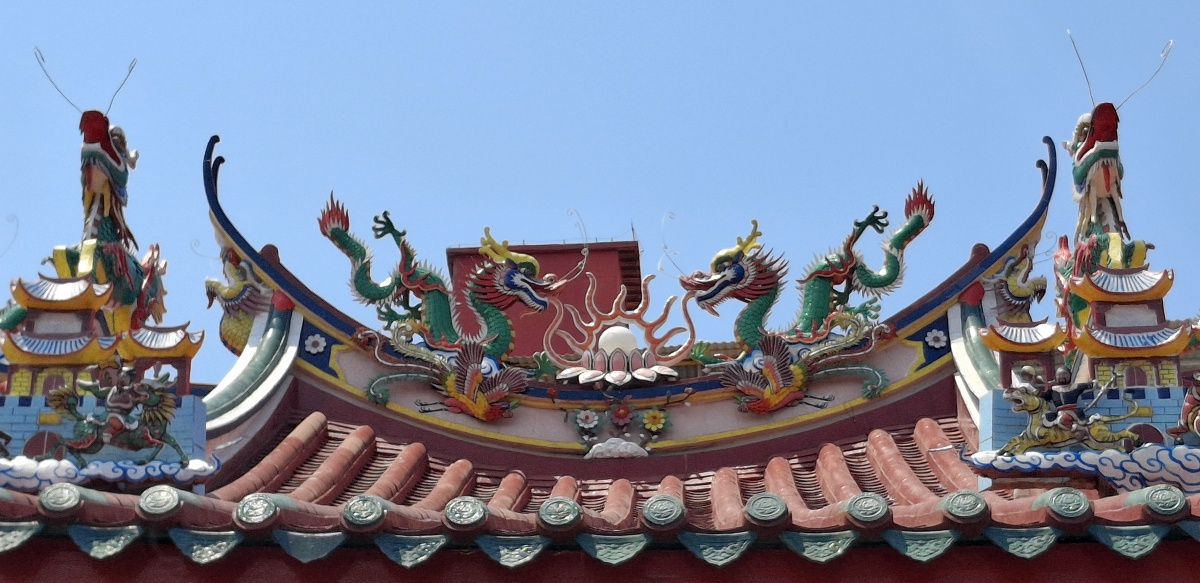
Hindu temple. There is an inscription in Gujarati (West Indian region) above the entrance and there are also inscriptions in Chinese inside.


PUBLIC TRANSPORT
Traveling around Sumatra is quite a challenge. Rail transport is essentially non-existent (only three short lines have been built, which is insignificant considering the island's size). While bus transport is extensive, it is extremely inefficient. For example, bus stations in large cities lack timetable displays and buses depart where there is a higher demand resulting in buses waiting for hours, sometimes even days. In towns and villages, however, you have to wait for a bus anywhere along a through road until it arrives with no guarantee of its arrival that day. Therefore, it is a good idea to travel between cities by unmarked share taxis. However, gathering the list of phone numbers of drivers working on specific routes is time consuming and requires a great deal of patience. Share taxis only depart once they have filled their passenger list, which can add a day to the waiting time, even on popular routes. However, they also have a significant advantage - drivers announce their arrival an hour before it and transport passengers to their destinations right to their doorstep.
Public transport is practically nonexistent in large cities. In Bandar Lampung, with its population of over two million, there are certainly no such things as buses or trams. However, there are usually unmarked car taxis and usually marked motorcycle ones.
Therefore, the only working mobile taxi app, Grab, is very useful here. However, you should be aware that the streets here are jammed almost 24/7, which results in long waits for a taxi and a significantly longer journey time to your destination.

One of the four bus stations in Bandar Lampung, from which, after almost ten hours of waiting, I took a share taxi to "conquer" Sumatra.
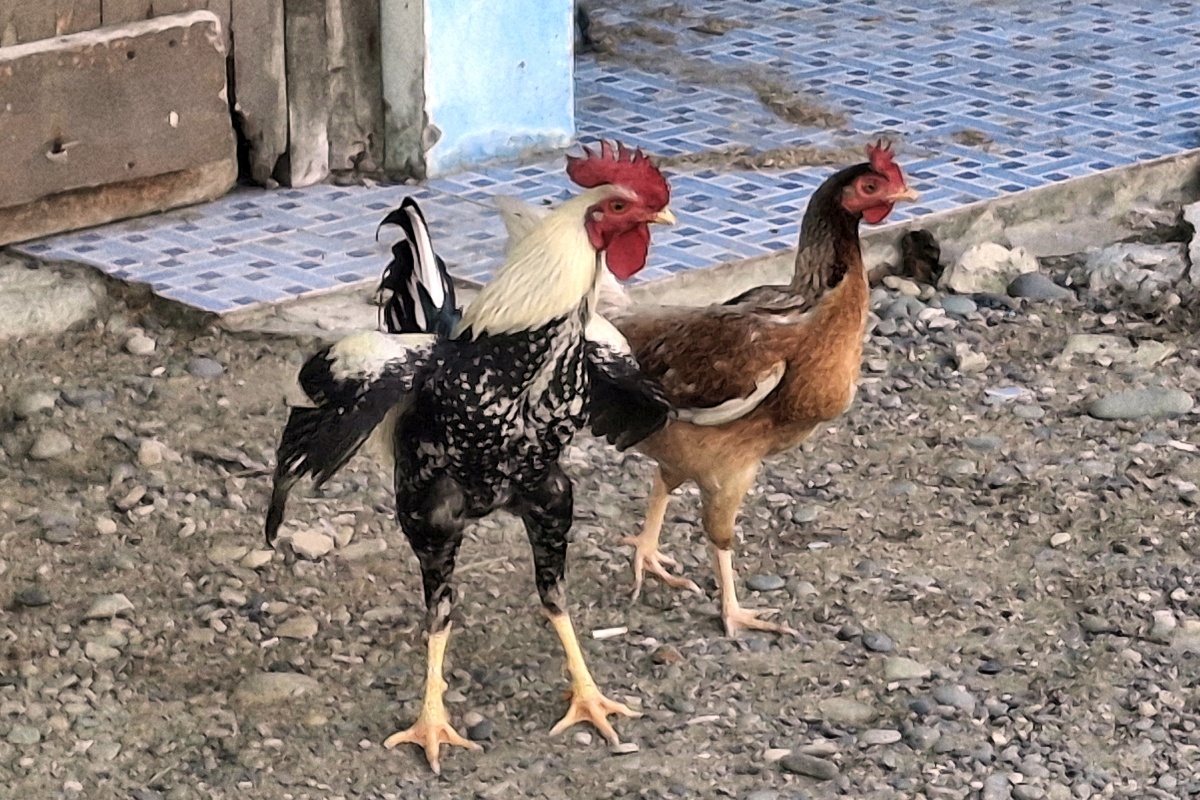
The station was not crowded, so chickens were wandering easily around the maneuvering area.

Waiting for a bus at the largest bus station in Bandar Lampung. These ladies are the first ones there, so they must be very lucky to reach their destination today.
The list of bus destinations posted on the building's windows is just empty advertising. The buses will go anywhere, as long as they have a full complement of passengers.

When there is no chance of getting a full complement of passengers on a bus, much more expensive private cars operating as share taxis come to the rescue. I had an exclusive seat in the front next to the driver.
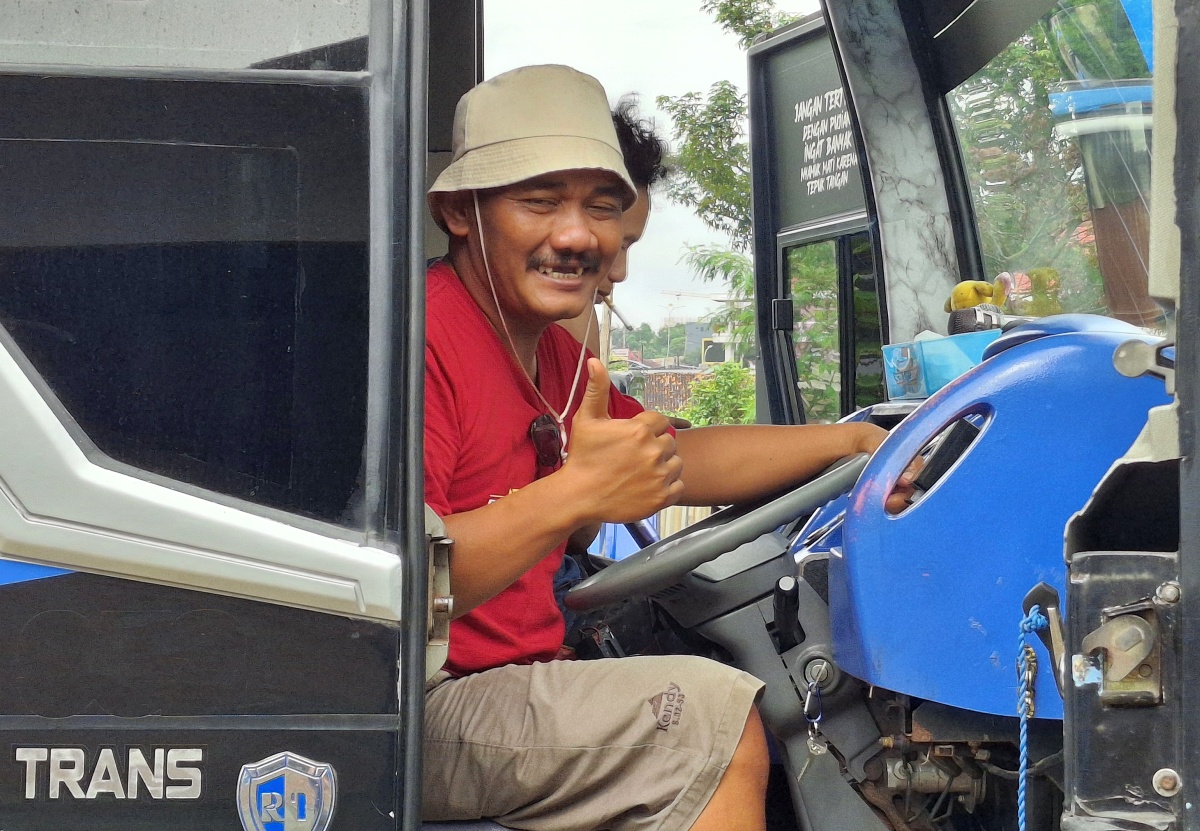
Very nice bus driver.

This bus was first two hours late (inhaling exhaust fumes and road dust in the scorching tropical sun while waiting for transport makes every minute count), then it broke down en route and while driving through the jungle, the driver had to "convince" food-hunting macaques to move off the asphalt road. Fortunately, I finally reached my destination without any transfers and the same day.
WOMEN ON SCOOTERS
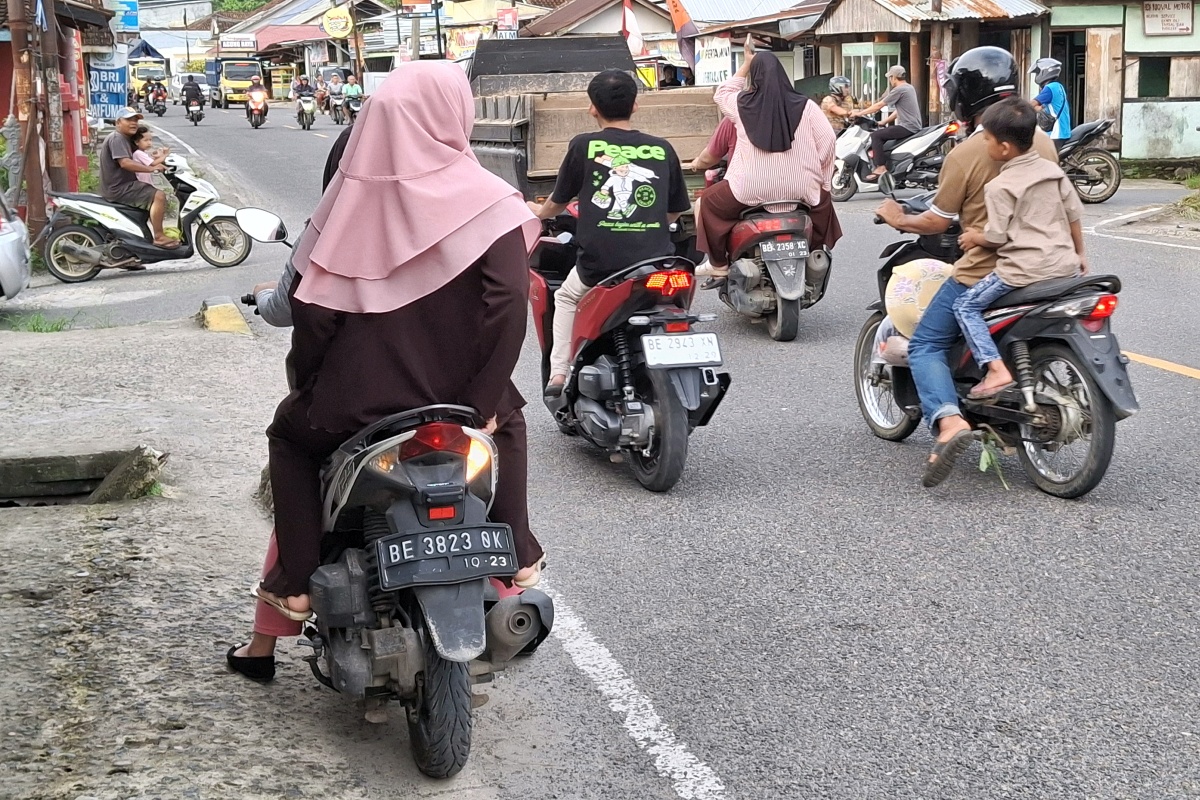
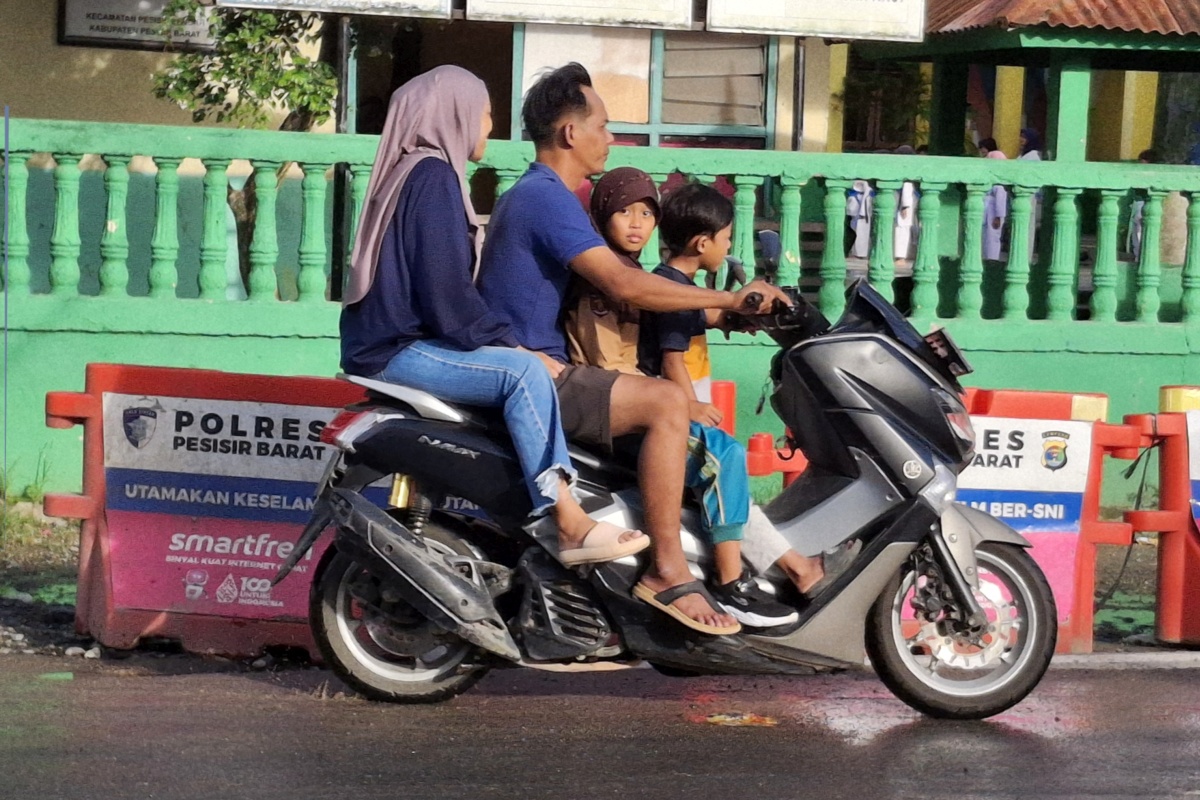
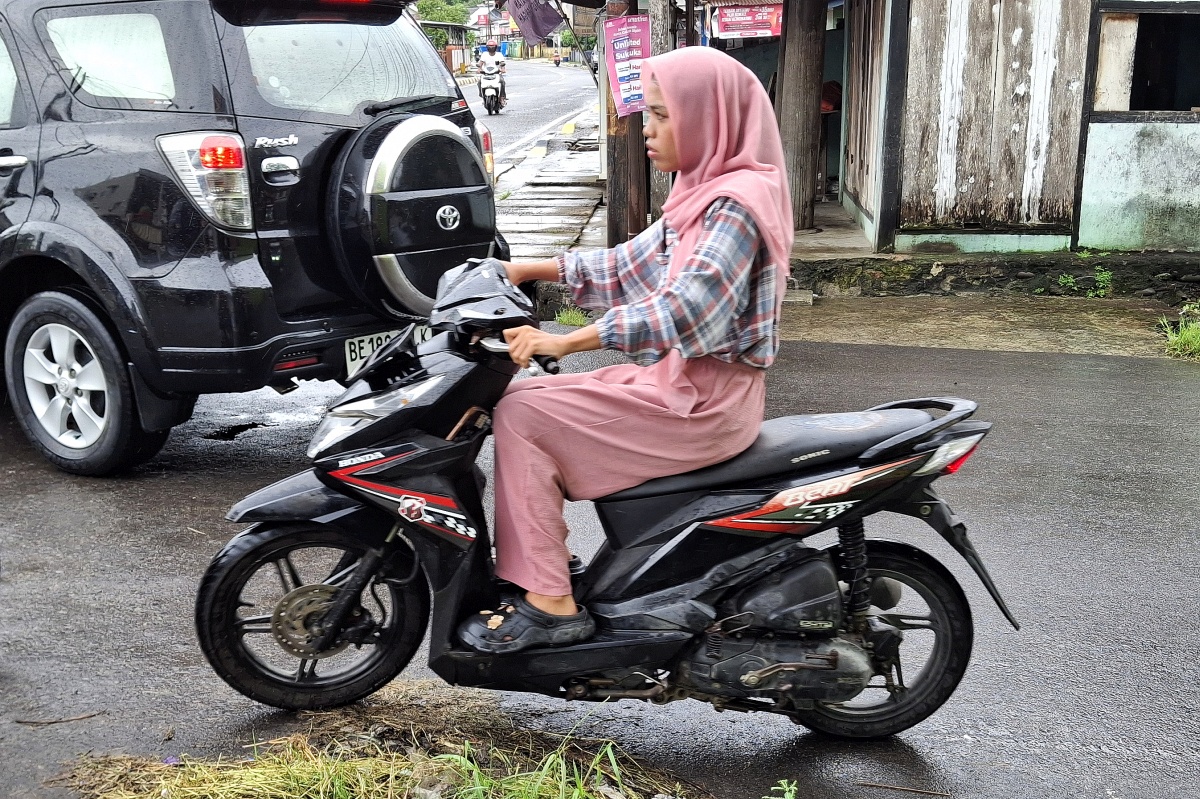
The sight that intrigued me from the very first moment and continually electrified me throughout my stay in Sumatra was the sight of women in Muslim garb riding scooters. Photographing them has become almost my obsession :-)







SOCIAL LIFE
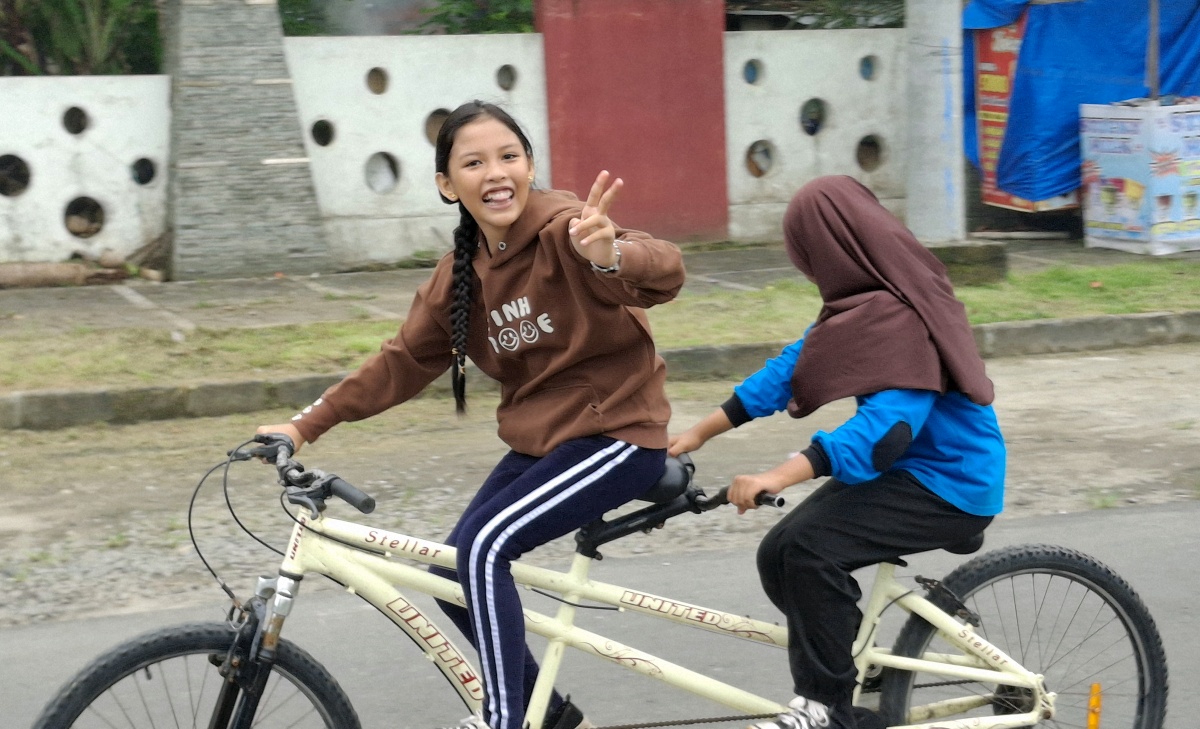
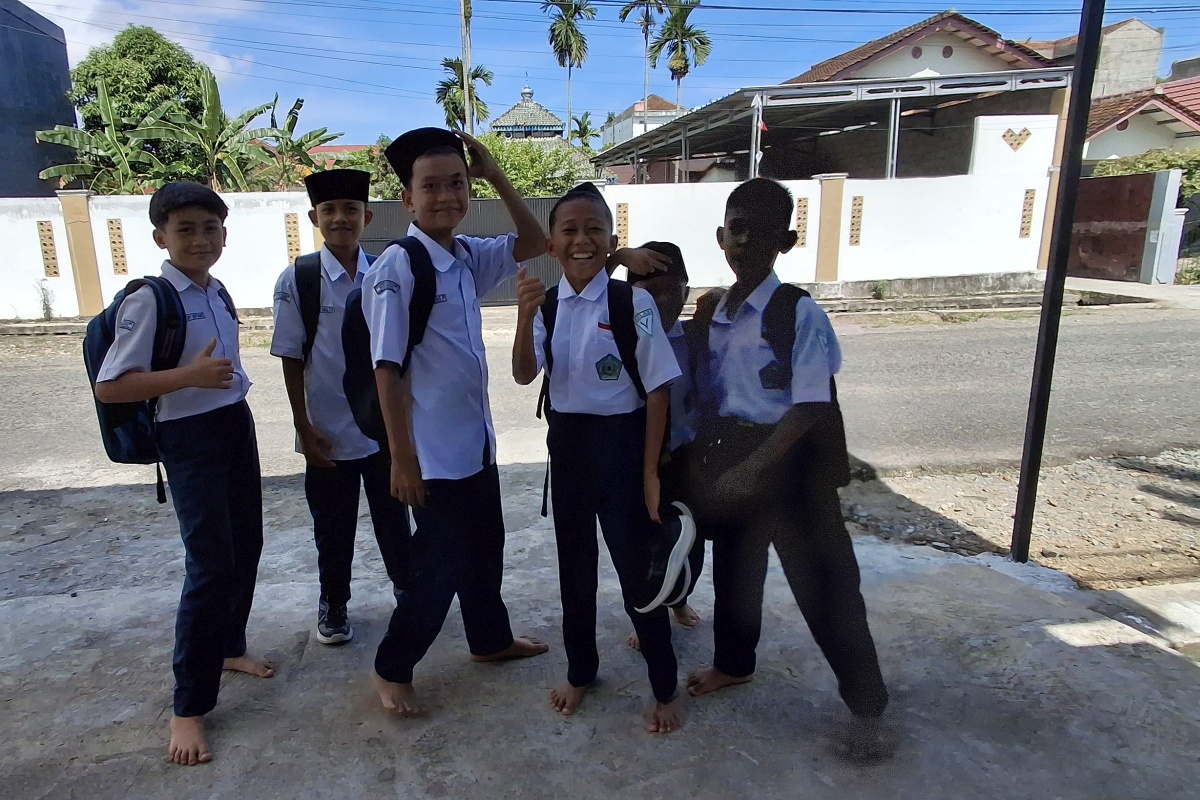
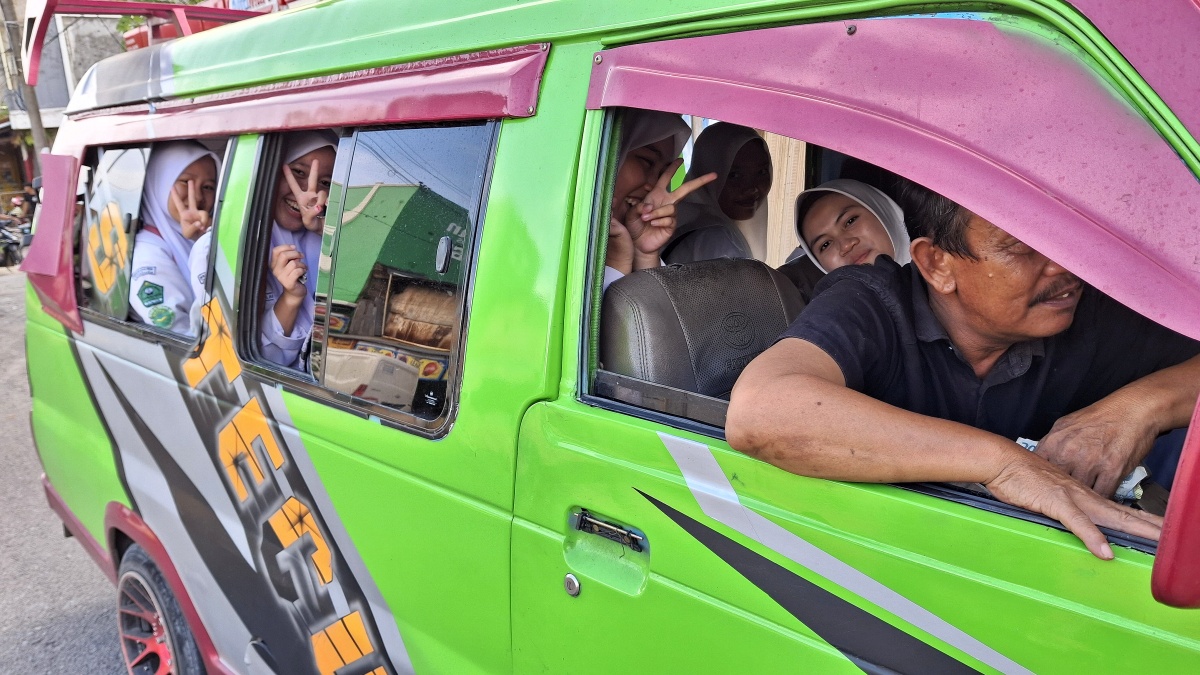
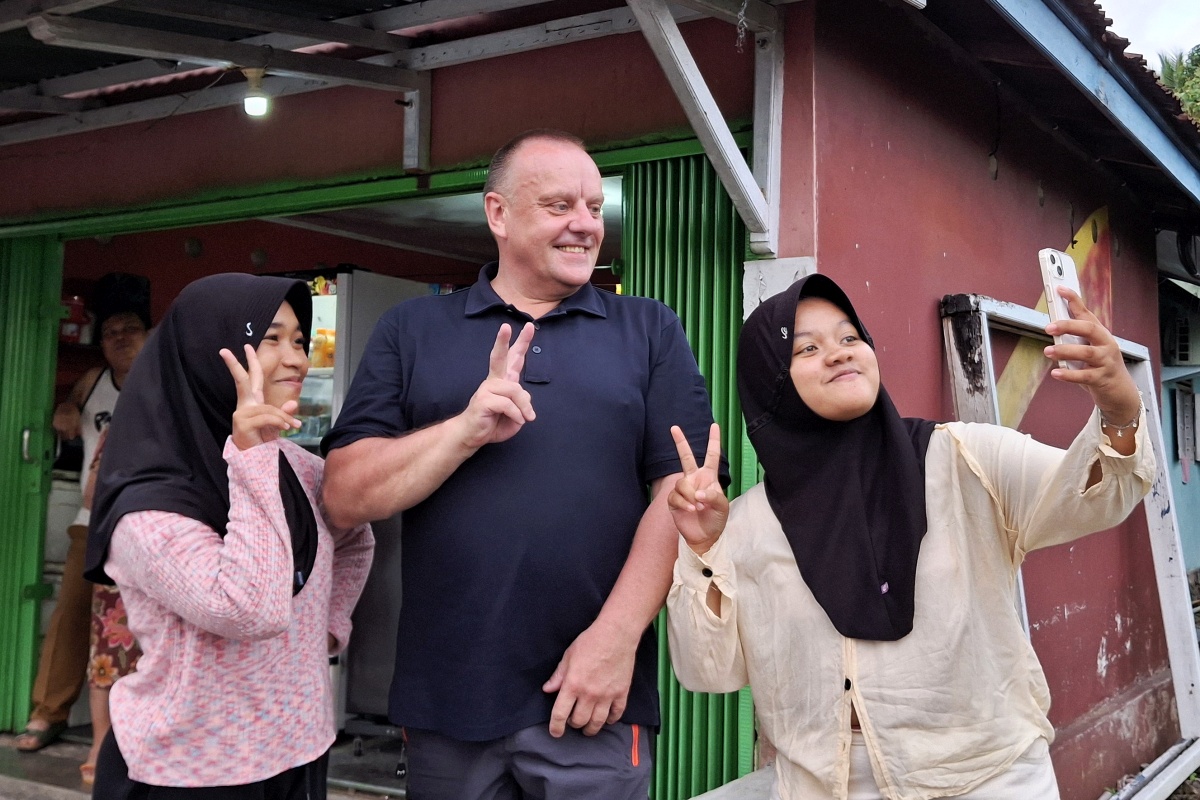
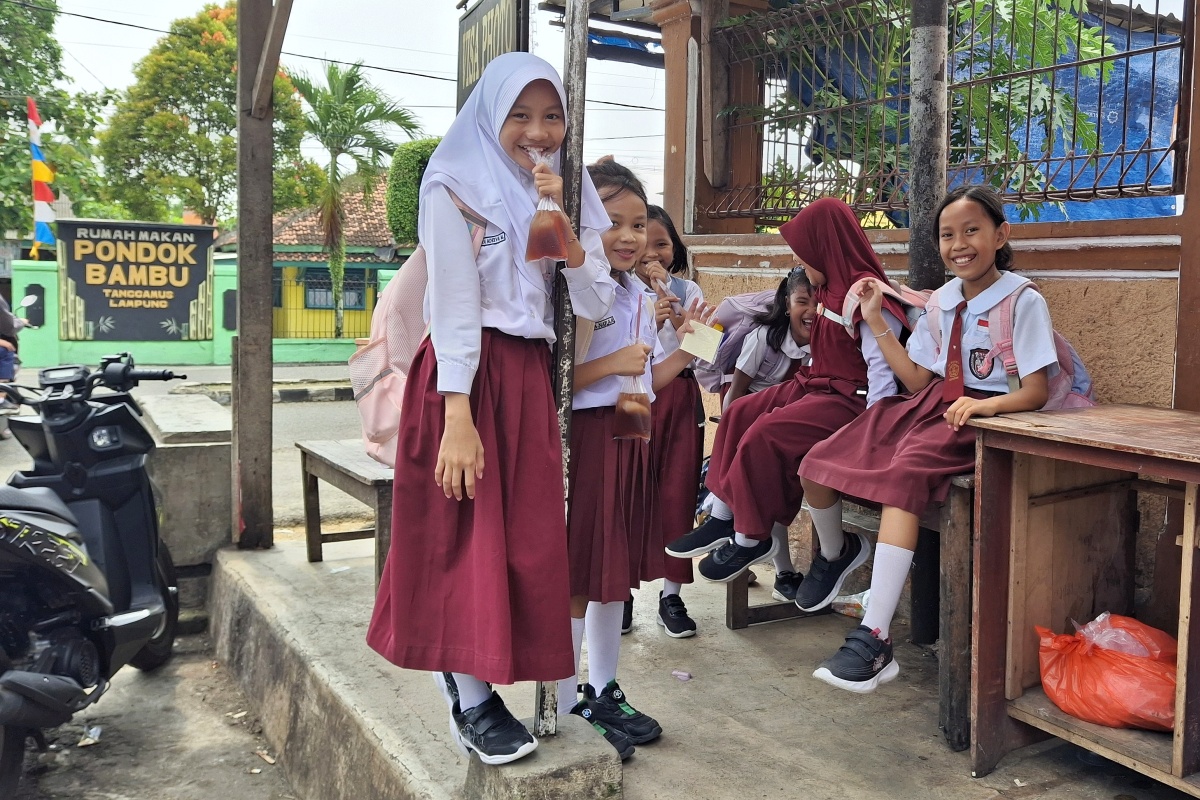
People here are very open, cheerful, warm and curious about everything. The sight of a white person is exotic to them. When you are in a public place, you practically constantly feel someone's eyes on you. It is just a shame that almost no one here speaks English.
In the city, greetings from pedestrians and scooter riders are common. Just stop for a moment on the sidewalk and a group of curious people will immediately gather, some of whom will discreetly photograph your every move. I have been asked many times for a group photo and several times I have also been asked to touch my nose, which is much longer than the local standard.
Men frequently strike up conversations, trying to offer any kind of service for a symbolic sum, while young girls often, without hesitation or delay, ask about the name, age, marital status and number of children. After hearing any answer, they run away in embarrassment covering their mouths and giggling loudly.









DISHES AND STREET FOOD
You do not know the true taste of life unless you have tried authentic Asian cuisine. The best is, of course, street food, where dishes are prepared exclusively with fresh ingredients. It is a true delight for the stomach. The photos below are the best explanation what I mean.
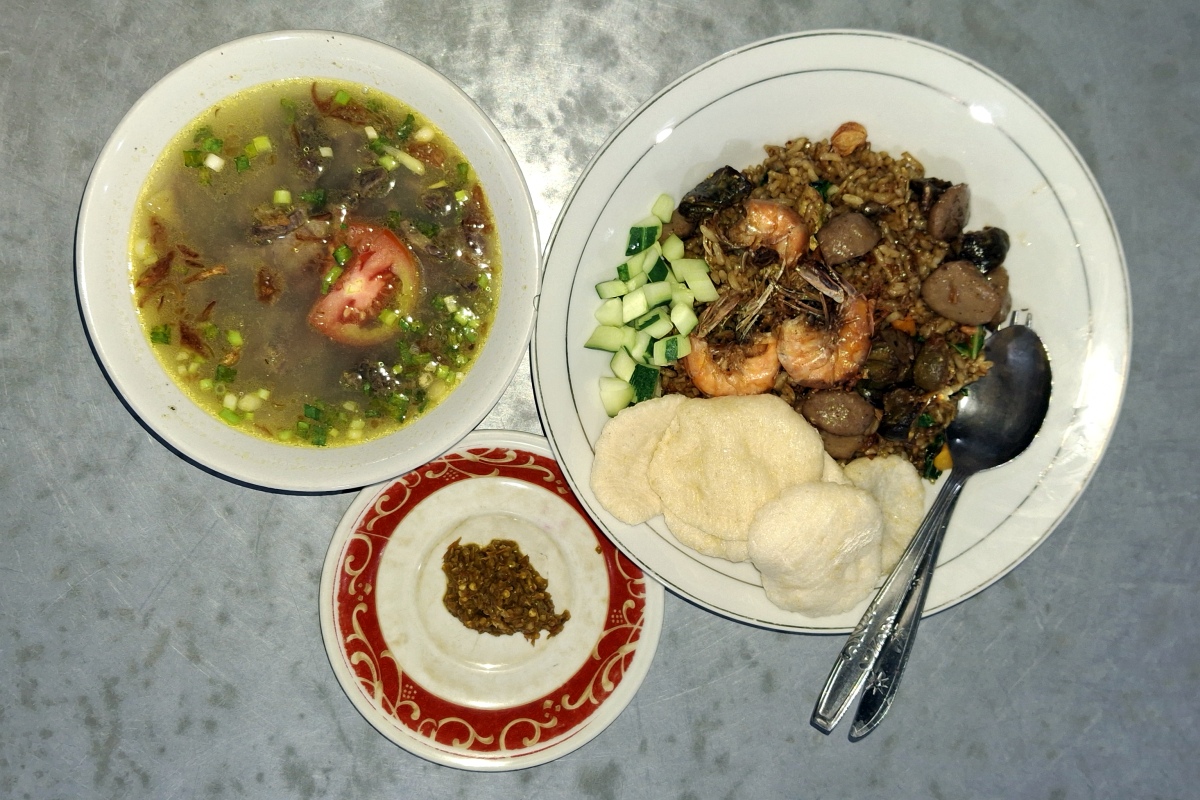
First meal in Sumatra, at a bar somewhere in the endless slums of Bandar Lampung.

Roadside diner for truck drivers.

And that is just a fraction of this diner's culinary offerings.
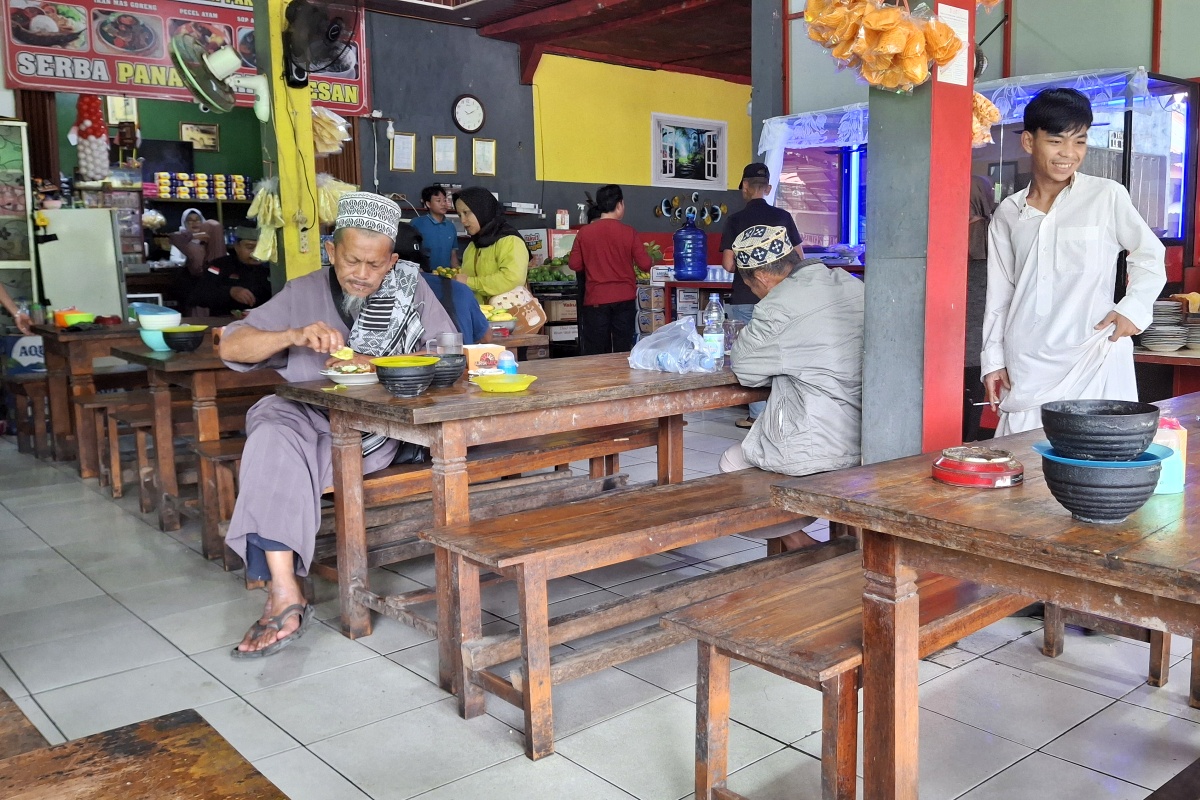
I was very happy when I found myself back at the same restaurant after a few days, because the food was truly delicious.


Local dish. On the menu, it was called: Salted baby squid with stinking beans served with rice and egg. I also ordered a blended juice made from dragon fruit.

Courteous dinner at a restaurant. However, offered dishes do not have the same delicious taste as street food.
Behind me there are tables for those who do not like to sit on chairs (most customers chose this option).


Boiled sweet potatoes.

Rib soup, fried fish, traditional Indonesian dish nasi goreng with seafood (i.e. fried rice with crab and squid), longan juice and a plate of greens.


Non-alcoholic drink made from longan fruit, in my opinion, the tastiest fruit in the world.

Photo with the chef and the entire team involved in preparing the dinner (see the three photos above).
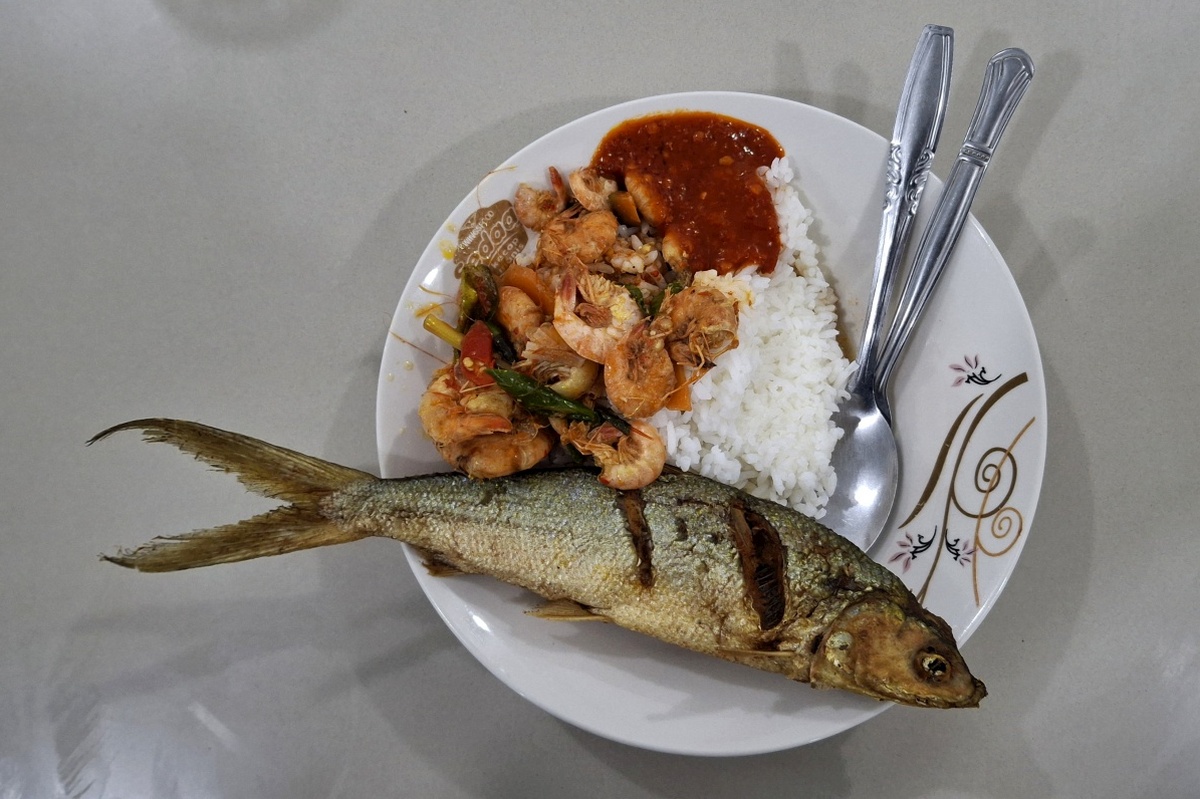

Local bar for workers in multi-hectare gardens.

And one of the meals they serve there.

Afternoon tea in the guest room on a mat put on the floor. In the house, where I also stayed, there were no chairs or tables. I am convinced that not only in this village but also within a hundred kilometers can afford such luxury.

Lunch. The pancakes were made from banana fruit growing right next to the house.

Local delicacy called lammang prepared for special occasions. It is sticky rice baked in an oven in a bamboo stalk (pictured on the right). After being removed from the stalk by use of machete, it is dipped in chocolate made from local cocoa beans (food chemistry experts are probably going crazy right now that they did not have any involvement in it ;-)
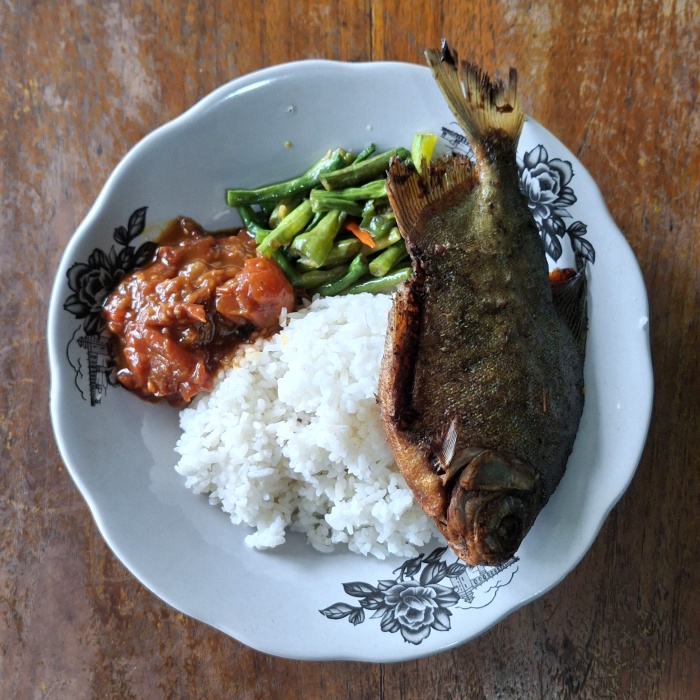
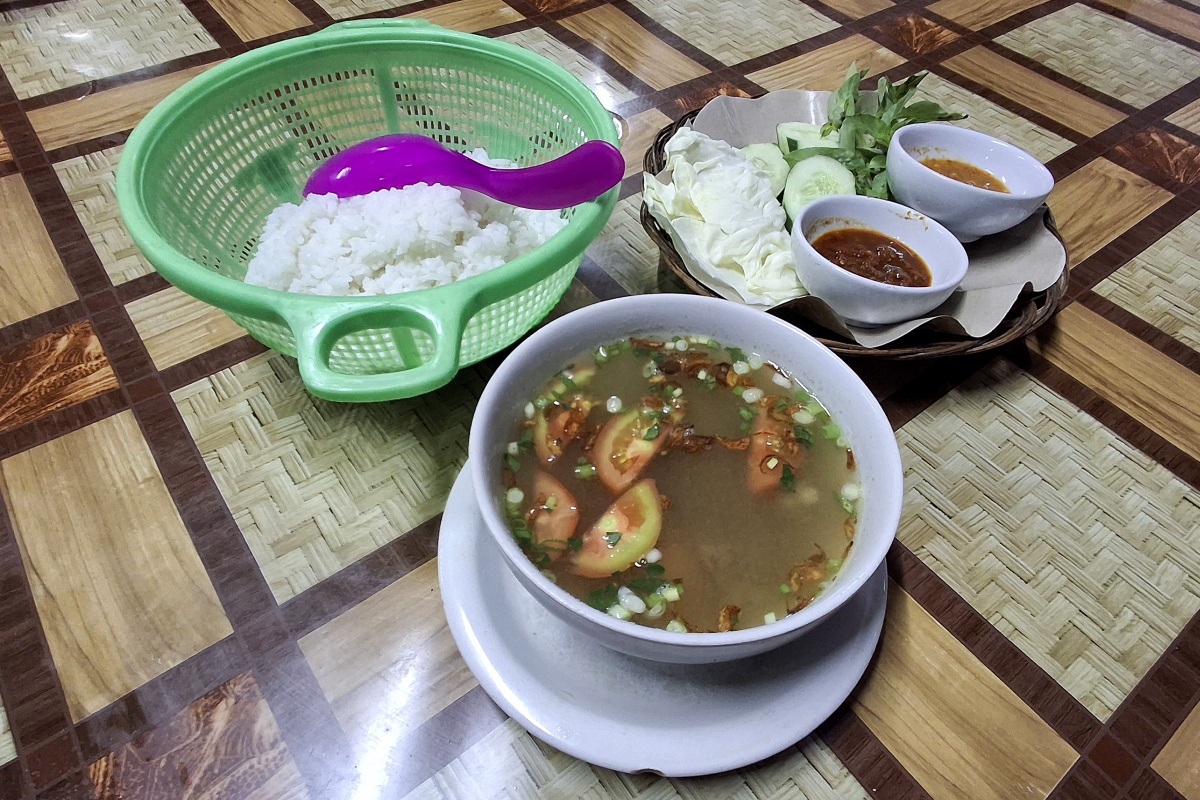
FRUIT AND VEGETABLES
I ate fruit and vegetables I had never tried before, and even some I had never even heard of. Unfortunately, it was not durian season.

Typical multi-hectare garden used for growing fruit and vegetables on an industrial scale. Everything grows here completely haphazardly, without human intervention. However, the climatic and soil conditions are so perfect for vegetation that it requires no care or maintenance. I am convinced that if you stuck a fork into the ground, it would sprout its first leaves after just a few days ;-)

Fruit stand.


Dragon fruit, also known as pitaya or pitahaya. This variety has beetroot-colored flesh.

Salaka, also known as snake fruit or snakeskin.

The flesh of the salaka looks like garlic cloves, but in reality it has a unique, rather sweet flavor with a refreshing sour note.

Longans also called drangon eyes. I would compare the flavor of this fruit to a combination of linden honey and rose hips. For me, this is the tastiest fruit I have ever tried.

Edible fruit of the fragrant pandanus. It is also used to make perfumes and air fresheners.

Riping jackfruit.

Edible fruit of the cucumber tree.

Flower and unripe fruit of the world's tastiest Sumatran coffee.

Very sweet fruit of the sapodilla tree. However, be careful of the hooked seeds, which can get stuck in the throat when swallowed.
WILD BEES AND HONEY
Many species of bees live in Sumatra, especially wild ones that nest in tree trunks and branches in the rainforest.
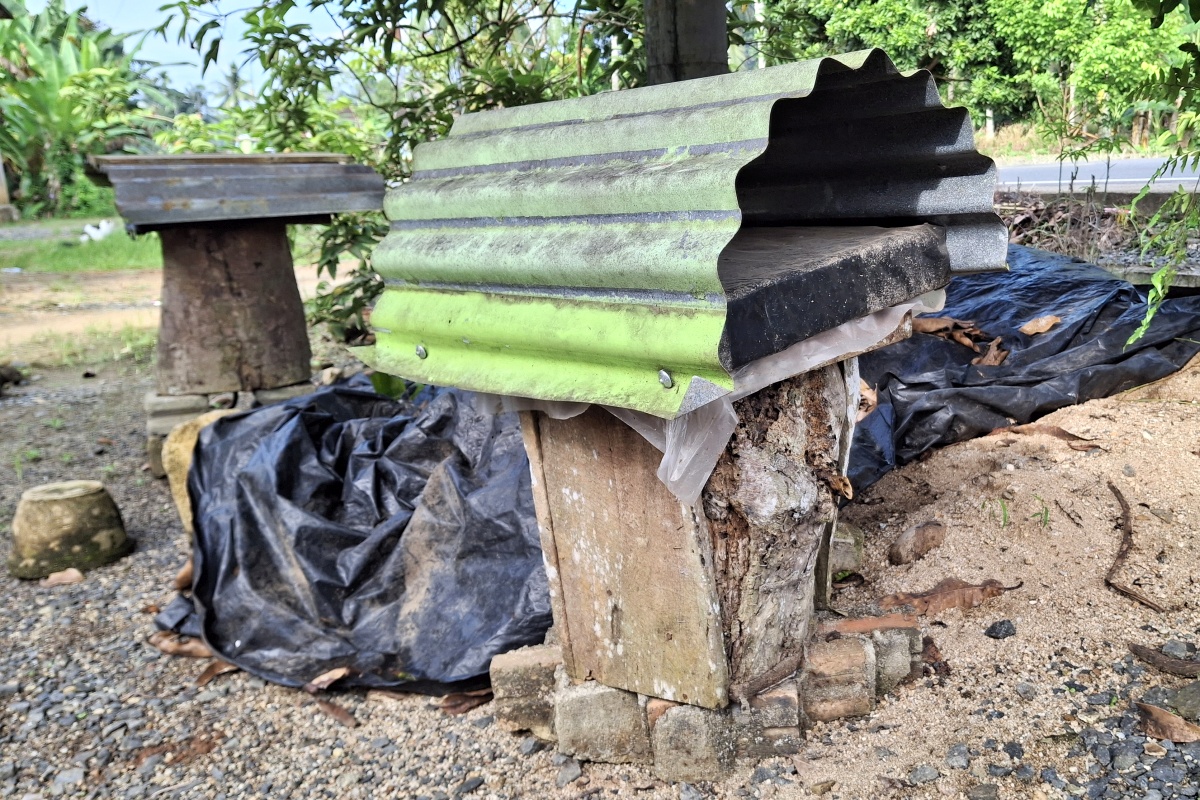
Wild bee apiary in the village of Pemerihan. Each hive contains a different species of bee.
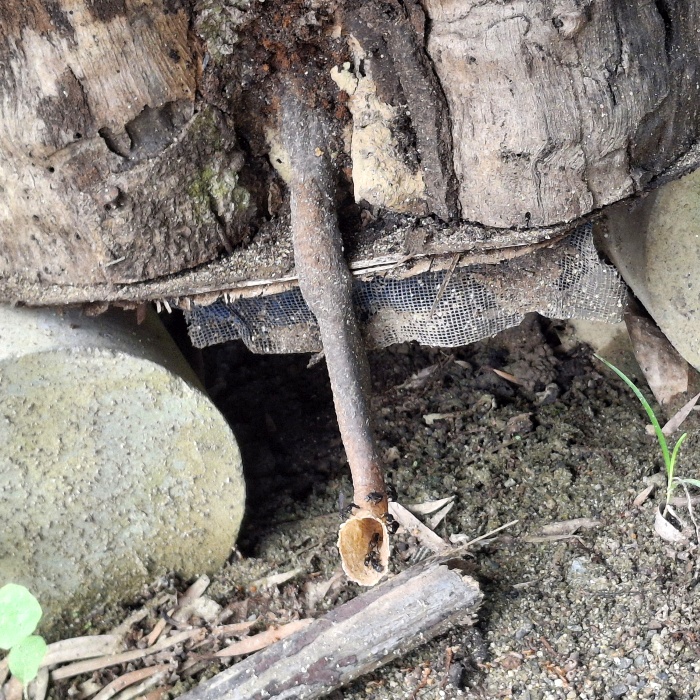
Entrance to the hive. It is made by bees from a ceramic material. I have also seen such structures high in the trees of the Sumatran rainforest.

Freshly opened hive with visible comb cells. Surprisingly, the bees offered no resistance.

Trying the flavors of honey from different hives using a plastic straw. Each honey was different and the most interesting flavors came from naturally fermented honey.
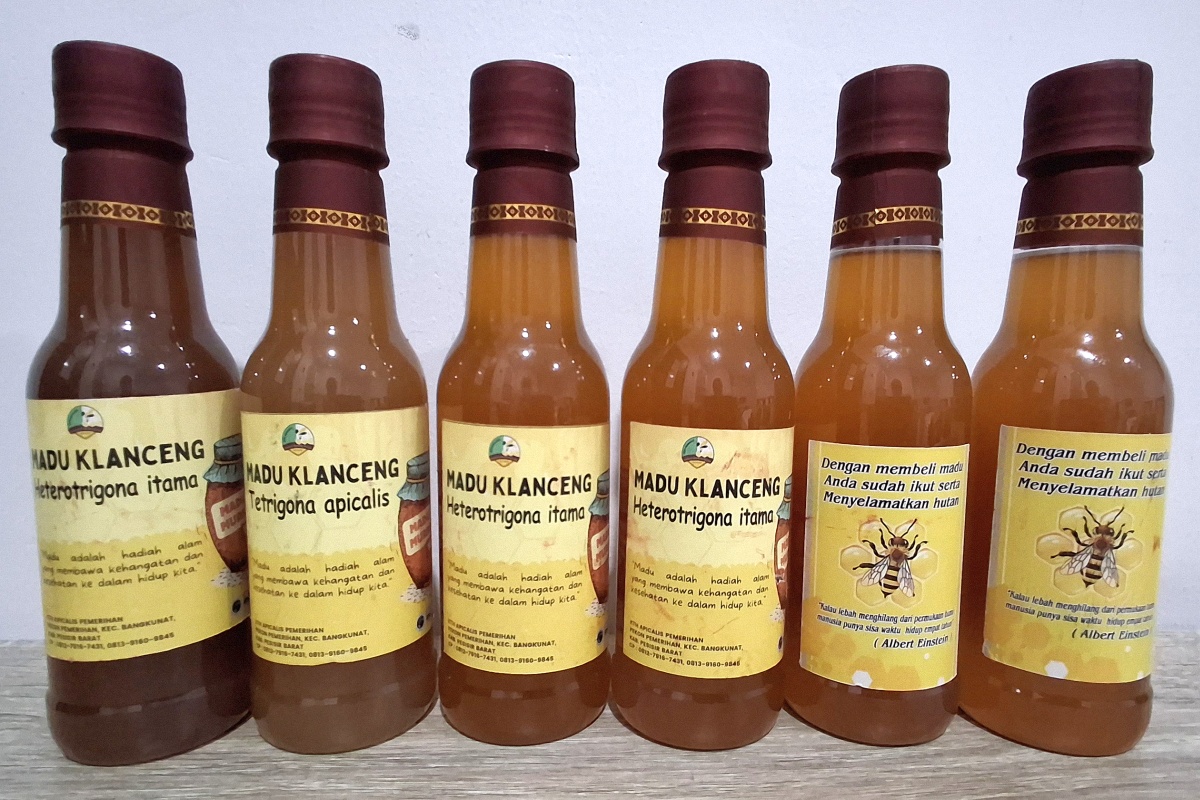
Fermented and still fermenting honey, which I took to Poland to sweeten the autumn weather.
TROPICAL FOREST OF BUKIT BARISAN SELATAN NATIONAL PARK
Bukit Barisan Selatan National Park is a protected area in South Sumatra, located along the Bukit Barisan mountain ridge. It is a UNESCO World Heritage Site. The park is covered with pristine forests, including tropical rainforest, montane forest, coastal forest and mangrove forest. It is home to endangered or critically endangered species, most of which are endemic: Sumatran elephants, Sumatran rhinos, Sumatran tigers, Sumatran langurs, Sumatran cuckoos, Malayan bears, Malayan argus, Malayan porcupines, Malayan tapirs, black-handed gibbons (siamangs), Pinocchio lizards, hornbills, African macaques and striped pigs.
The rainforests of Indonesia and Malaysia, which also include the forest of this national park, are among the most dangerous in the world, next to the Amazon rainforest and the rainforest of the Congo Basin.
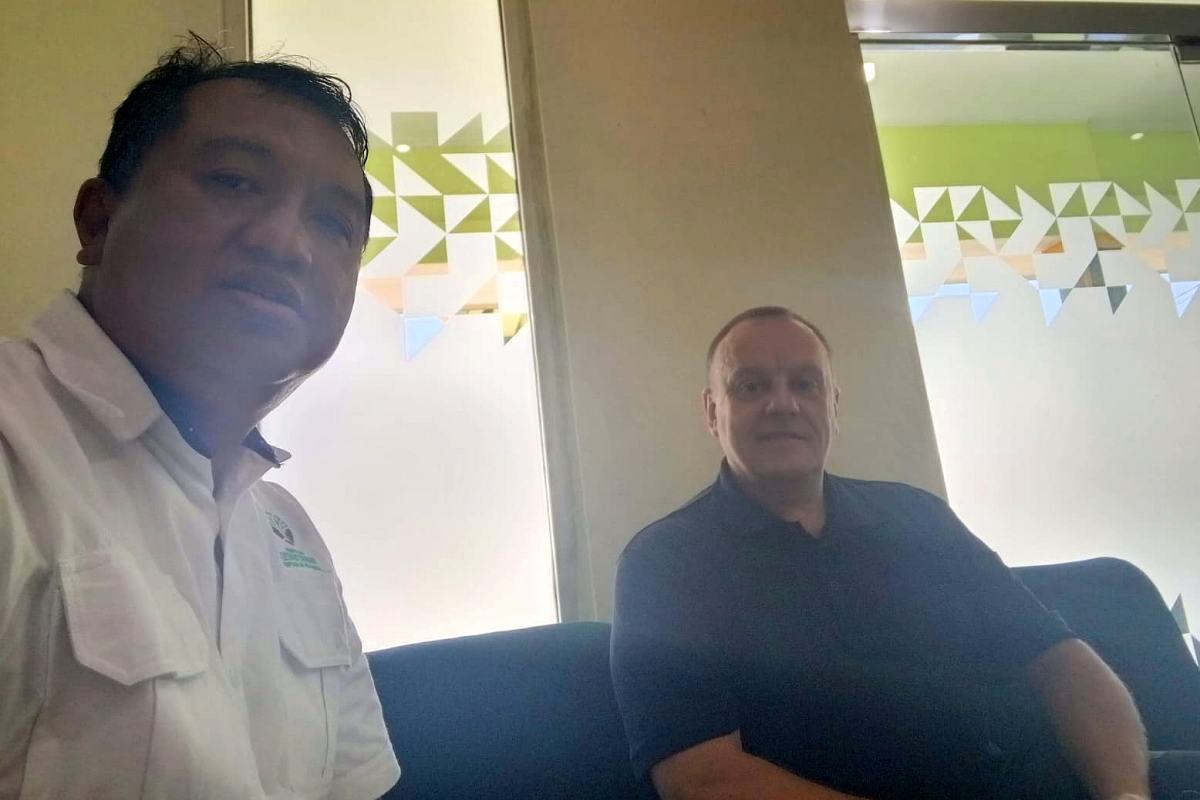
Planning the schedule of my stay with the director of Bukit Barisan Selatan National Park.
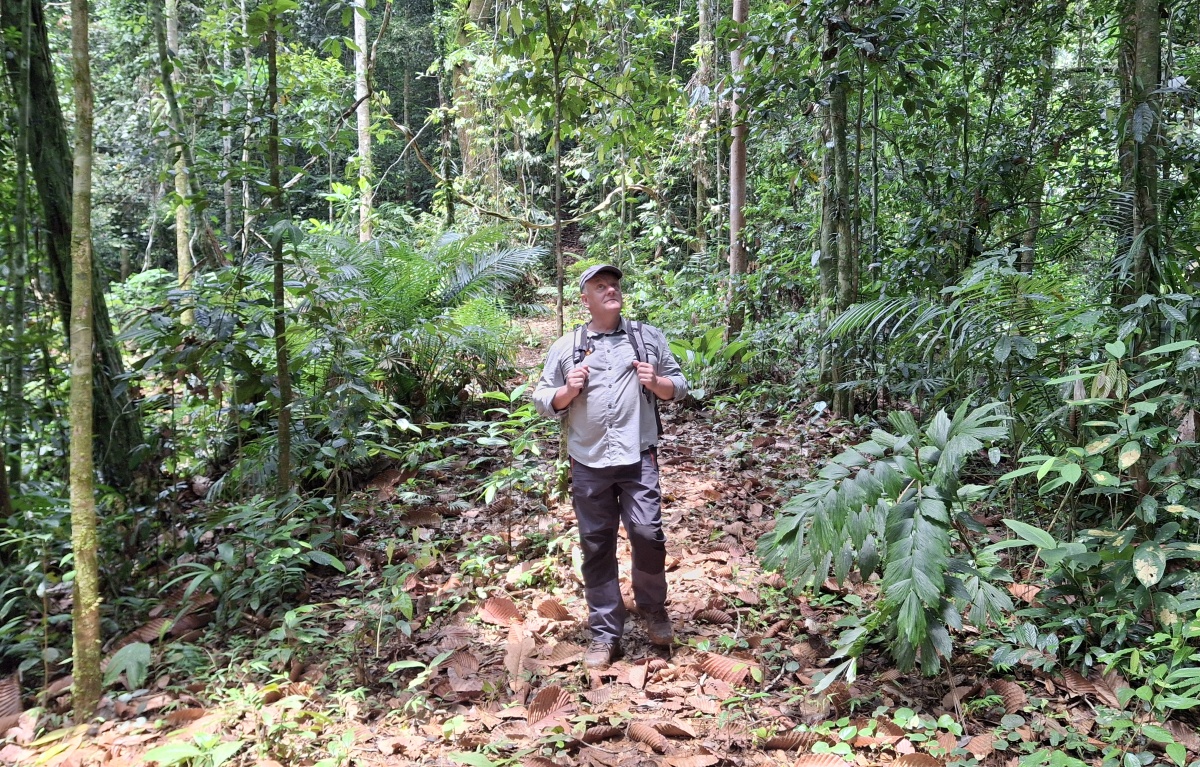
My dream came true and I finally found myself in... green hell :-o


In the jungle I was always accompanied by one or two rangers.

In another location in the national park, I was accompanied by an experienced guide (a resident of one of the nearby villages).


Refreshing bath in such a place stays in the memory for a long time. There were lots of fish in the water performing free peeling of my legs.
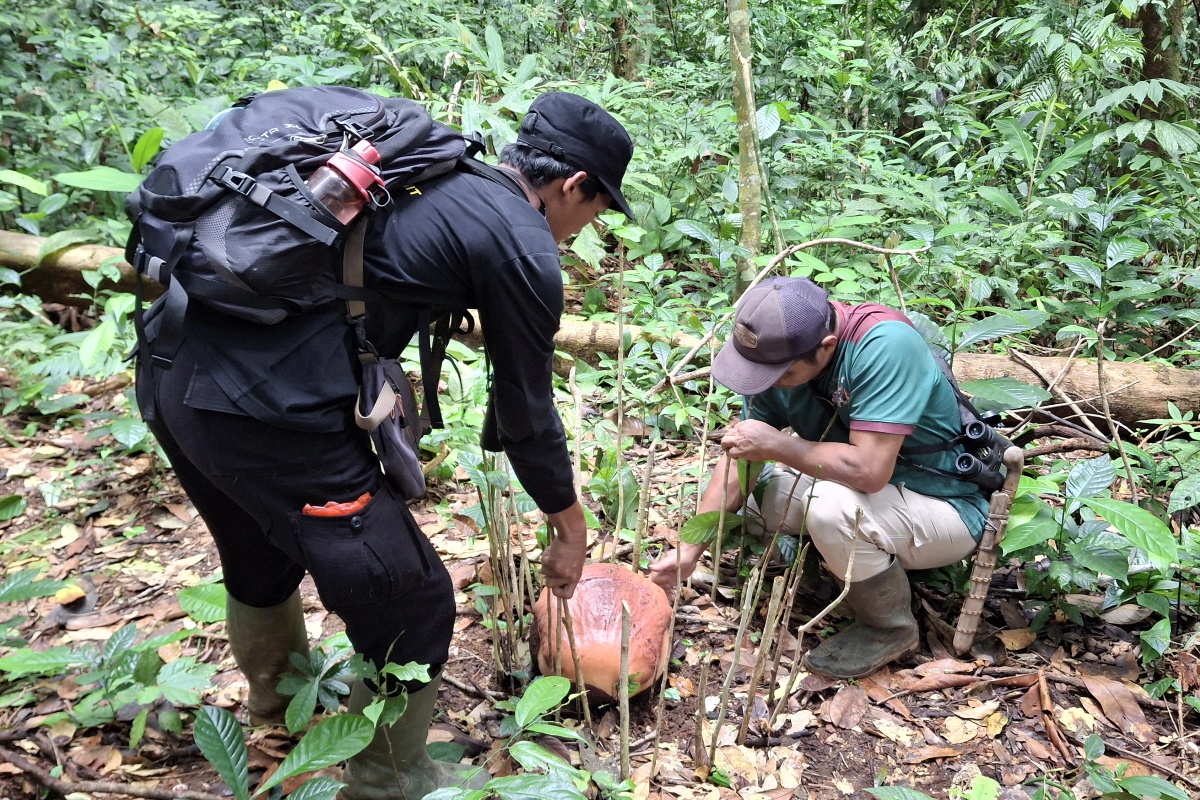
Rafflesia arnoldii - the bud of the largest flower in the world. It occurs in some rainforests of Southeast Asia. It is very widespread in this region of the national park. The rangers' opinion that this bud would bloom the following night was confirmed.

Blooming Rafflesia arnoldii is quite rare, as it blooms only once every few years and then only blooms for five days.
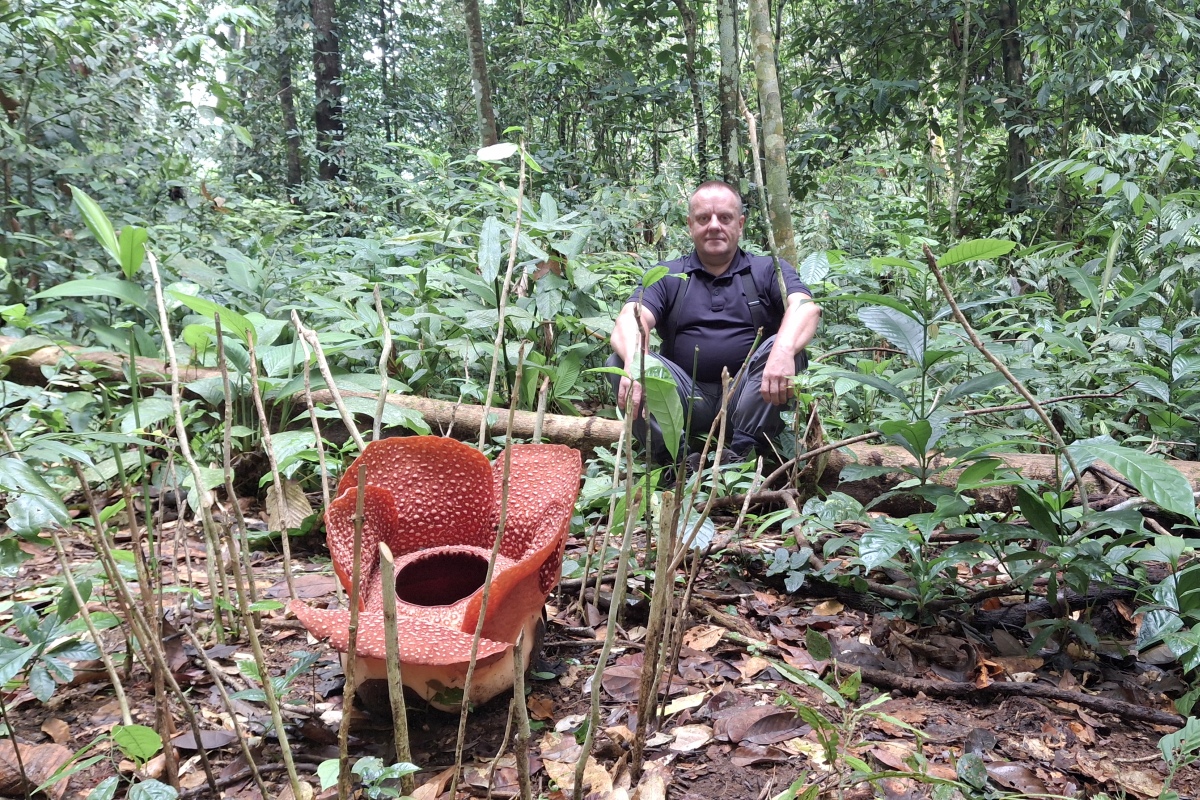
Rafflesia flowers can reach up to 120 cm in diameter and weigh of 11 kg. Rafflesias spotted by park staff are surrounded by a fence made of sticks.

Sumatran tiger footprint. There are hundreds of them on paths made by humans or animals.

What do tigers think when they see my footprint?

The tropical rainforest is not only dangerous. It is, above all, magical and beautiful.
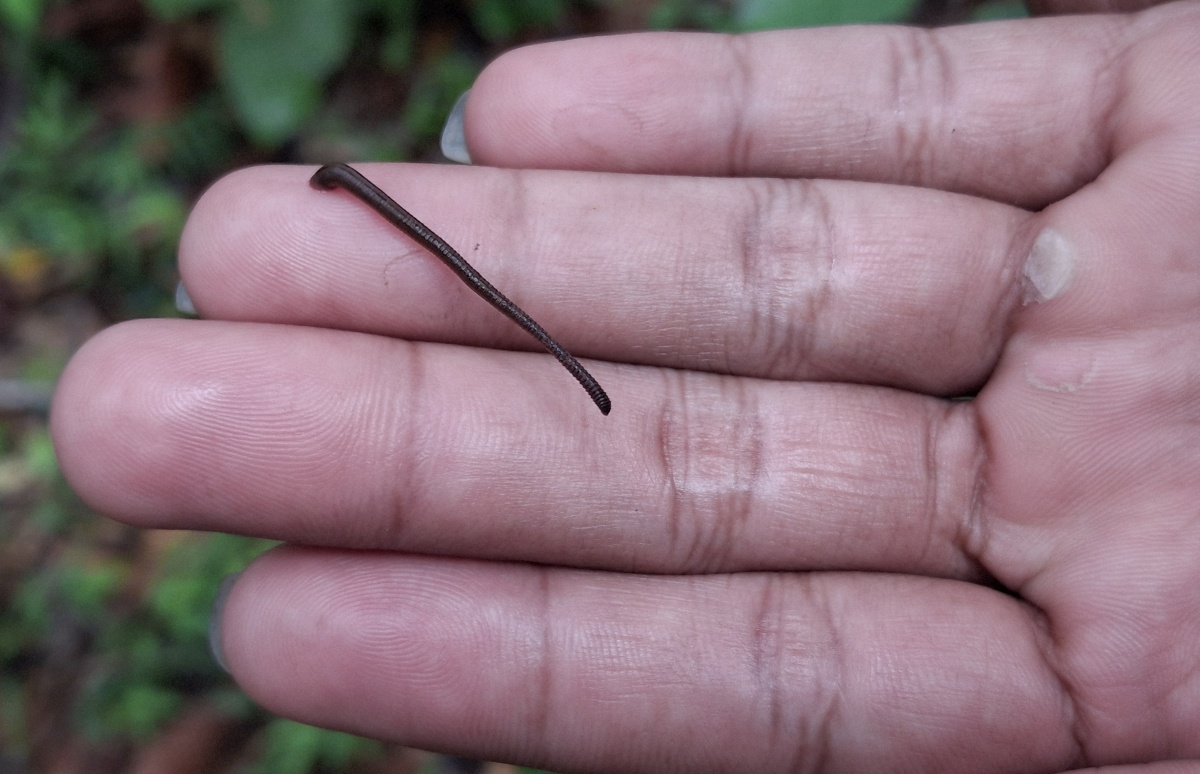
Leech sucked into a ranger's finger. Leeches are a big problem for visitors to the Sumatra rainforest. They live in the leaf litter and there are countless of them here. Every few minutes dozens of these "cyborgs" have to be removed. They sense their potential prey in many ways – they have up to a dozen pairs of eyes, are equipped with infrared sensors, carbon dioxide sensors, which is exhaled from the lungs, and air vibration sensors. Their mouths have suction cups, supporting hooks and strong jaws for cutting through skin. Vast majority of leeches also have suction cups at their other ends.

Lifting your pant leg is not enough to get rid of the intruders. You have to put in a lot of effort and cunning to effectively pry them off the skin. If grasped incorrectly, they elongate like jelly beans and finally slip out of the fingers holding them. However, the most difficult leeches to remove are those attached themselves to your sock. They are so tightly attached that they are torn off piece by piece with a lot of blood spraying out.
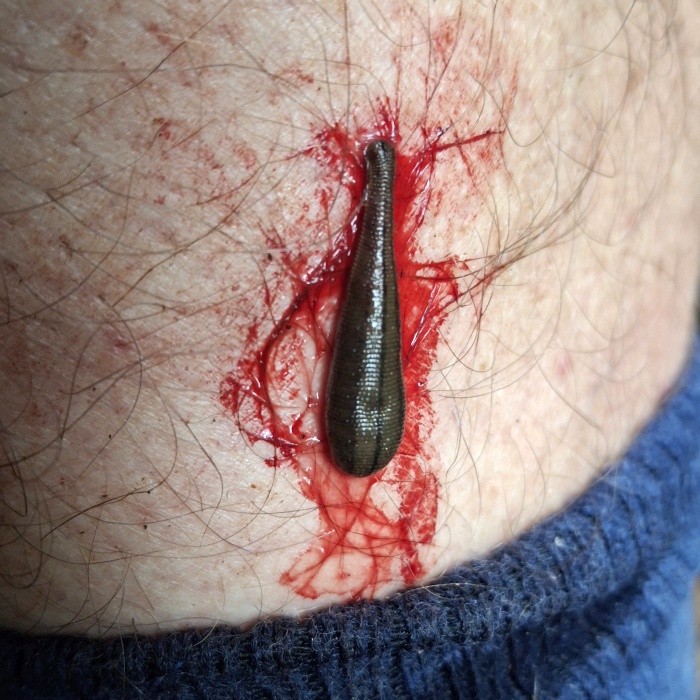
Leeches secrete hirudin, which prevents blood from clotting enhancing the visual effect.

Resting in a hammock. This is the only way to distance yourself from the bloodthirsty leeches.

Feathers of a male Malayan argus. It is known for its unusual eye-like feather pattern and impressive mating behavior (videos are readily available online).

At the Rhino Camp, I was offered accommodation in a wooden hut, but I decided to sleep in my tent. The nighttime sounds of the jungle, especially the sounds of gibbons at sunrise, more than made up for sleeping on a hard floor.
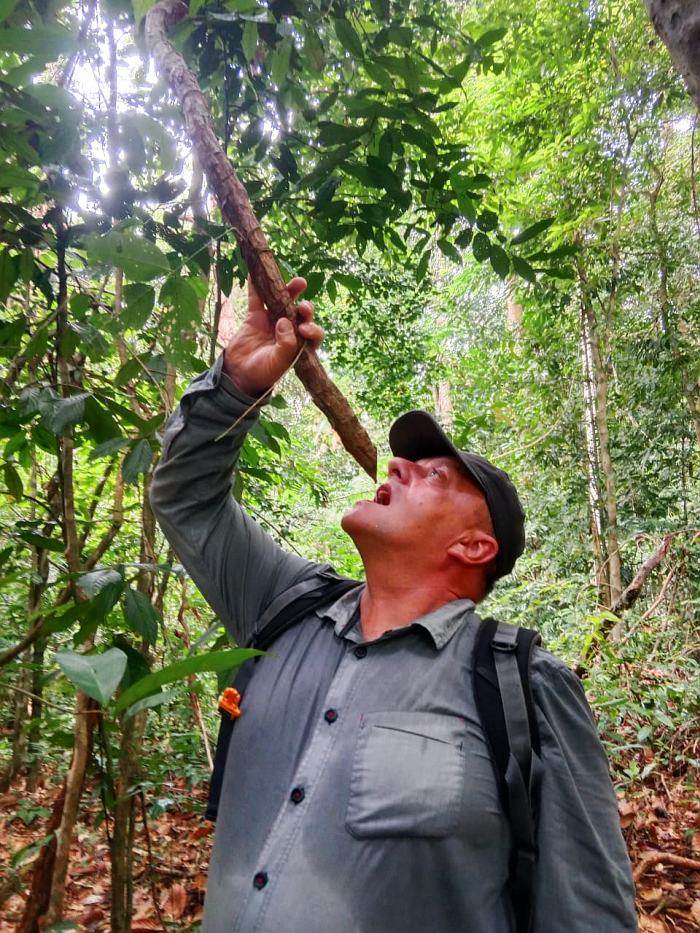
The water flowing from the cut liana is drinkable without treatment. Drinkable water can also be found in bamboo stems. However, only some of these plants store it.

The water used to brew the coffee was from a liana.


The battle for sunlight is usually won by the fastest and highest-growing trees.

I have the impression that this mighty tree has been growing here forever.
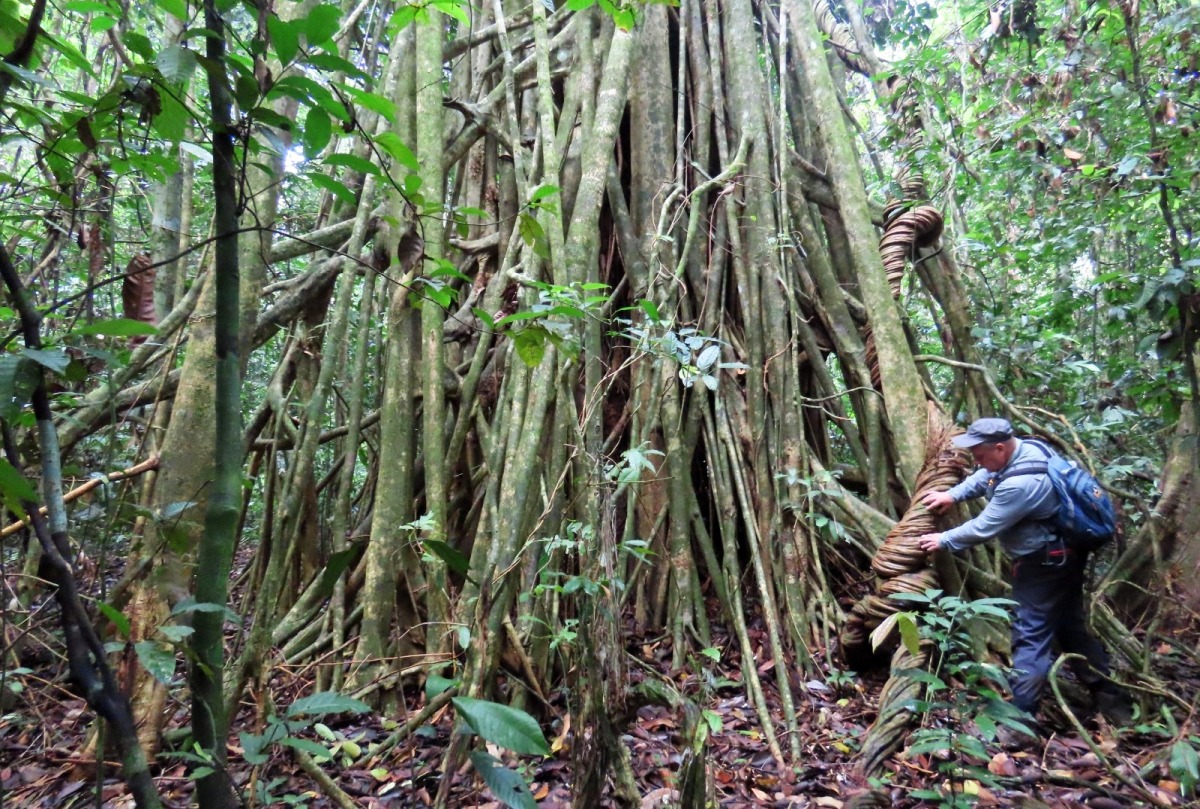
These are the aerial roots of a tree called Ficus altissima, which can reach heights of several dozen meters. Higher up, at their extension, a tree trunk begins, topped with a leafy crown.

Evening bath at the Elephant Protection Centre.


One of the nighttime escapades into the tropical jungle.

Looking for light-reflecting eyes.

Mushroom that glows at night time.

Butterfly in the colours of the Polish national flag.

The size of the butterfly was of a human hand.
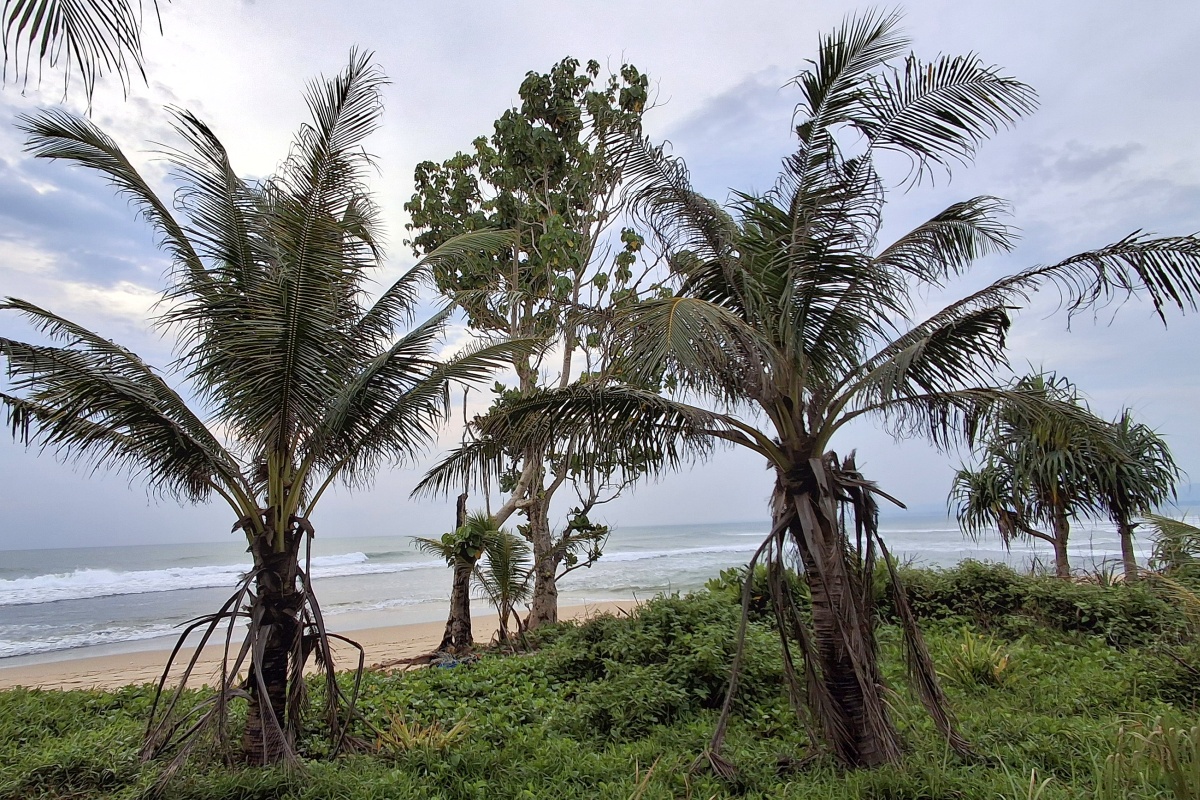
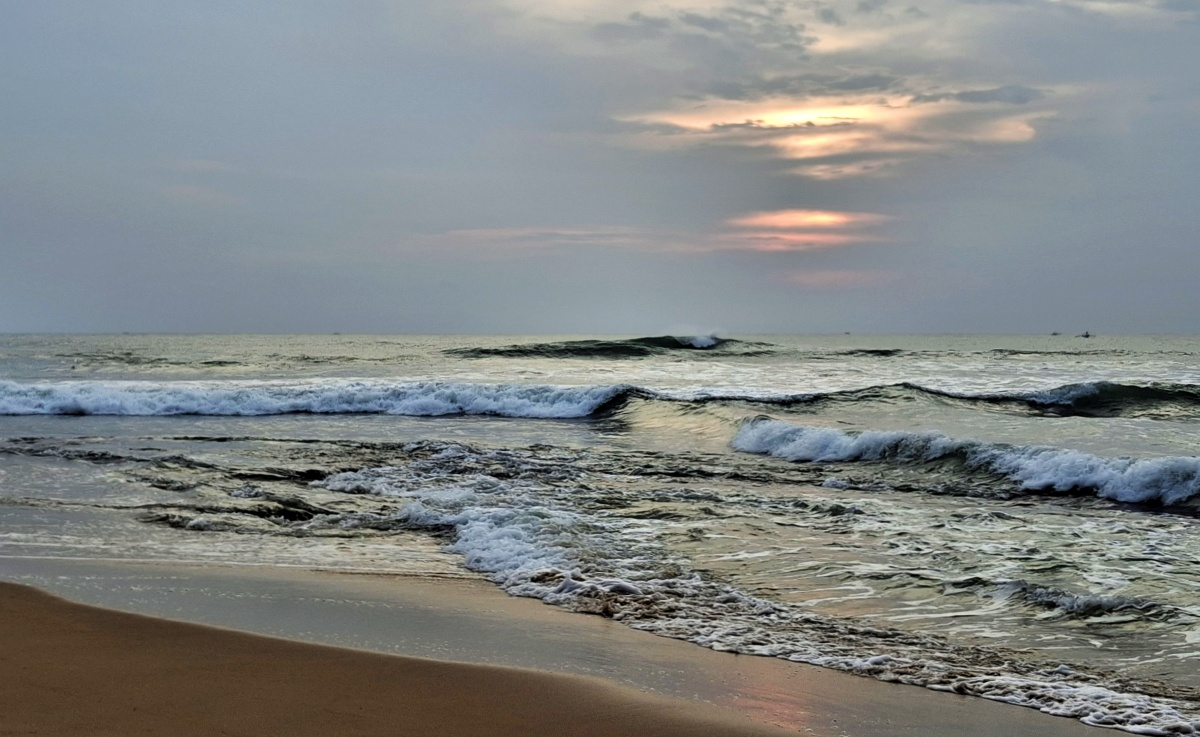
PARADISE BEACHES OF SUMATRA (and not only paradise beaches)
Sumatra's nature is not just a tropical rainforest full of dangerous plants and animals. There are also many paradise beaches here, and fortunately, most of them are still devoid of tourists and any tourist infrastructure.




MISCELLANY

ATM withdrawal. And that is how I became a multimillionaire in the blink of an eye. However, I spent it during a week.

Police station. I think none of the residents of this town have any doubts as to who is always right ;-)

Shelves with local coffee in an upscale supermarket. Now, I have a similar display in my apartment :-)
It is no secret that the best coffee in the world is from Sumatra. Due to unique properties of the soil and the unique method of roasting the beans, even the cheapest cup of coffee served in a countryside bar, is gentle for stomach as well as has an exquisite flavor and is neither sour nor bitter.

Return flight home. It looks as if the pilots dozed off in the air, for a while after passing Sumatra and then for a longer time over the Arabian Sea.
A FEW VIDEO CLIPS TO END

Short clip with street life after rainy sunset in Bandar Lampung.

Motorcycle taxi ride in Kota Agung.

Mosque at Krui.

In a mosque in Bandar Lampung 1/2.
In a mosque in Bandar Lampung 2/2.

Hindu temple in Bandar Lampung.

On the paradise beach at Krui.

With a ranger in Rhino Camp of the national park.

Elephants at the Elephant Conservation Centre of the national park.

Black-handed gibbons in treetops 1/2.
Black-handed gibbons in treetops 2/2.

Rafflesia arnoldii - the largest flower in the world.
My short comment (in Polish).
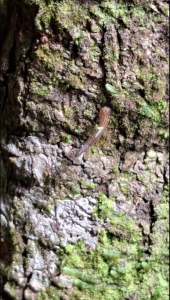
Leech on a tree.

Leech on my pants.

Drinking water from liana 1/2.
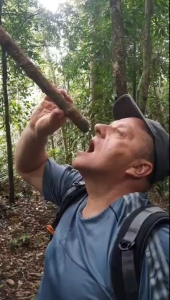
Drinking water from liana 2/2.

We could hear rustling of leaves. But what was it? A hungry tiger or a scared gibbon?